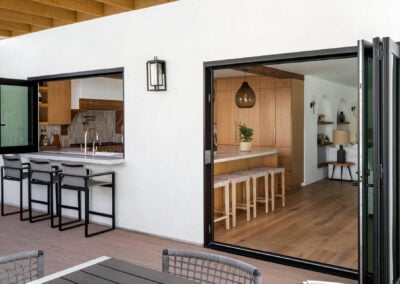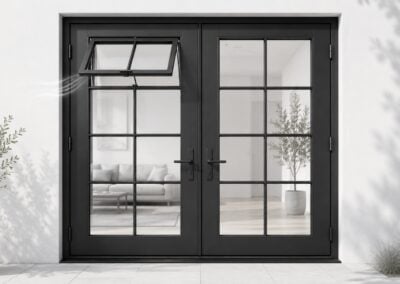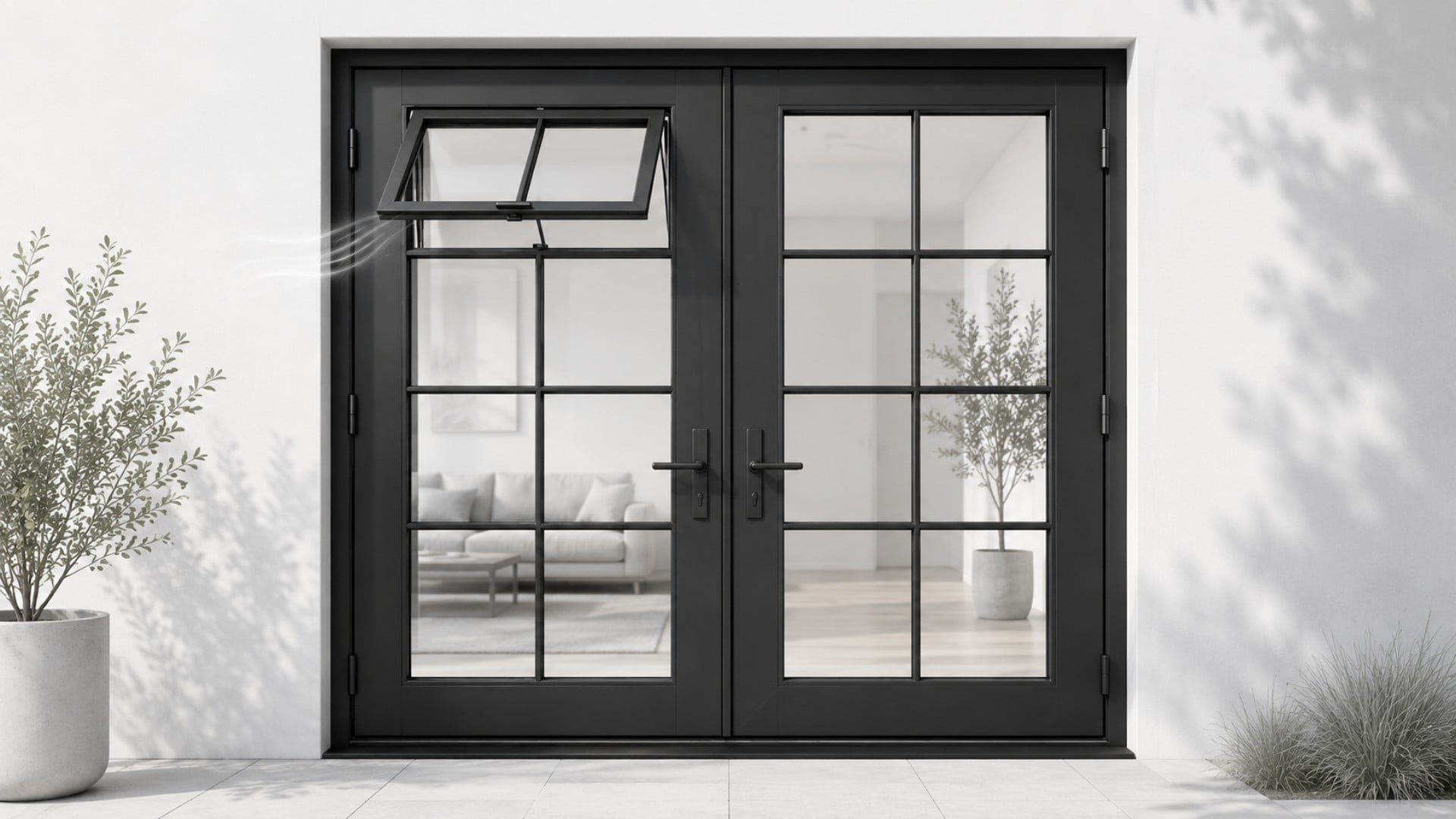
French doors are one of the most searched door styles for a reason. They bring in natural light, create a wide opening to a patio or backyard, and add a classic symmetry that works across a range of home styles. But a common follow-up question comes up once homeowners start researching: Can the glass actually open?
The answer depends on what you mean. The phrase “French doors with windows that open” describes several distinct configurations, and they work differently, have different price points, and are available through very different channels. This article maps all of them so you know exactly what you’re looking at before you start shopping.
Do French Doors With Windows That Open Even Exist?
The short answer is yes, but the longer answer depends on what you mean by “windows that open.” You have at least four distinct options, each one a different product with different practical implications. Some are standard residential options. Others exist primarily in custom or European markets and are harder to find through a typical replacement dealer.
Your Options for French Doors With Windows
French doors can be configured with operable glass in more ways than most people realize. Some configurations involve the door panel itself opening in a non-standard way. Others add operable glass alongside or above the door. Here is the full picture.
Operable Glass Lites Built Into the Door Panel
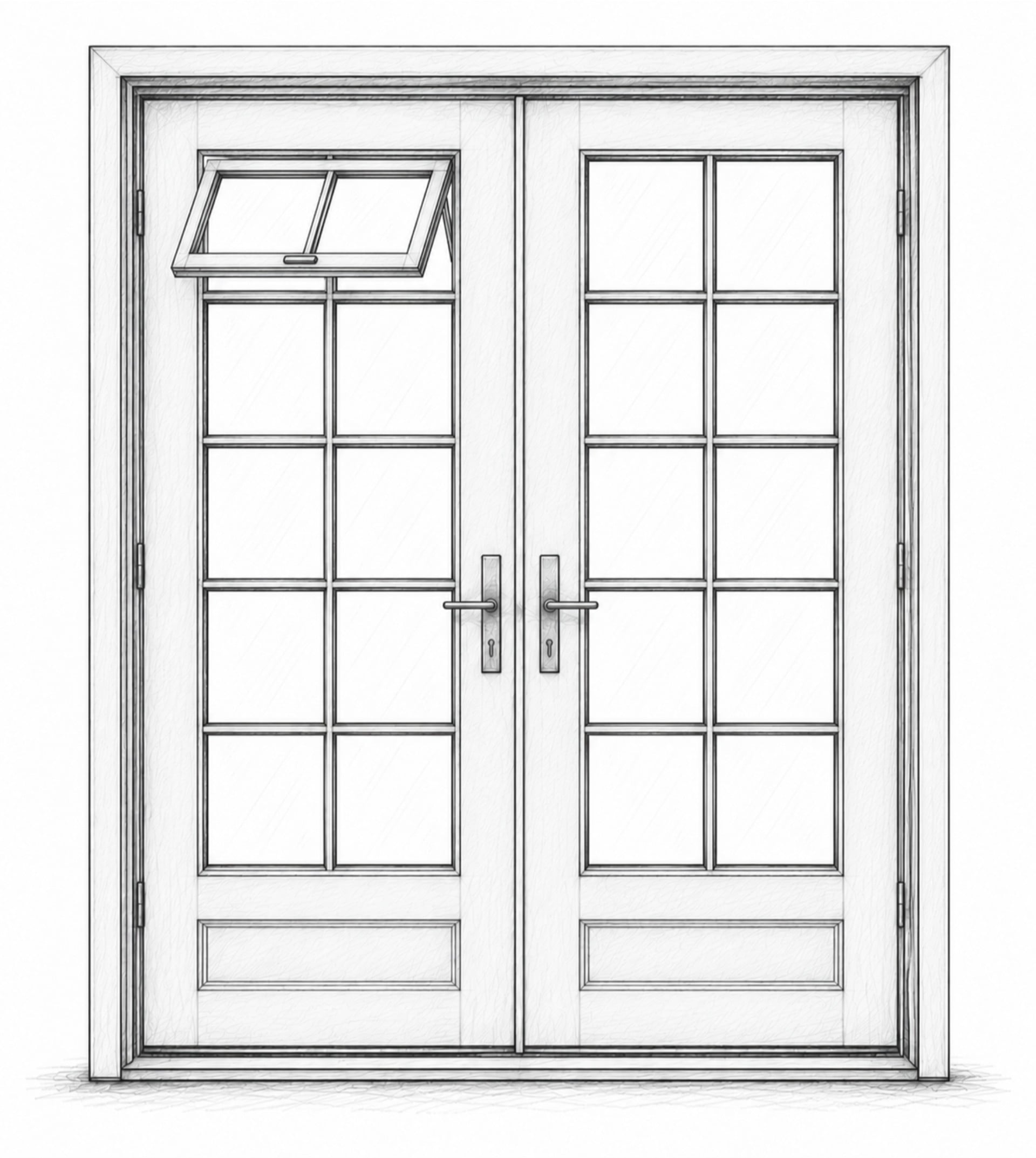
Traditional French doors got their name from the divided glass panels running the length of each door, individual panes set into a grid of muntins. In older construction, some of those panes opened like small casement or awning windows. Modern residential replacement doors use sealed, double-pane insulated glass units instead, with the grid pattern applied decoratively over a single continuous pane. The change came down to performance: sealed units significantly outperform individual operable lites on both energy efficiency and weatherproofing.
True operable lites within a door panel still exist, but they appear almost exclusively in historical restorations and high-end custom architectural work, where those performance trade-offs are acceptable. The weatherproofing and energy performance requirements of a modern insulated door make them impractical for standard residential replacement. If this is what you pictured, it exists, but it’s unlikely you’ll find it through a typical replacement dealer.
Operating Glass Panels
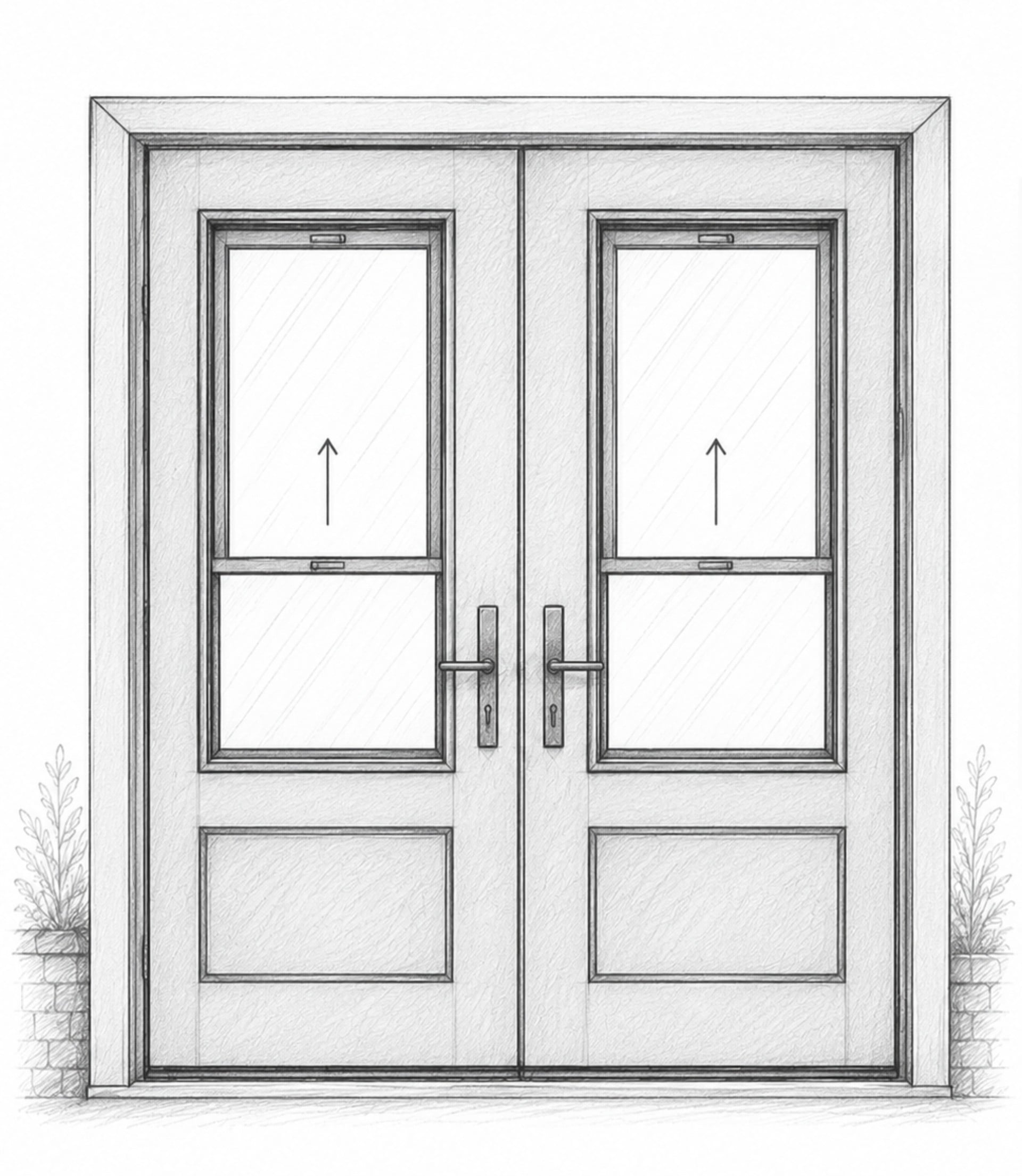 Some specialty French doors, most commonly iron or steel designs, feature glass panels that operate independently from the door panel itself. The door stays closed while the glass portion swings or slides open, functioning more like a window built into the door than a traditional lite configuration.
This option delivers ventilation without opening the door, which is useful for security and privacy. The trade-off is that iron and steel door systems sit at a higher price point, require more maintenance than fiberglass or vinyl, and are not standard offerings through most residential replacement dealers.
Tilt-and-Turn French Doors
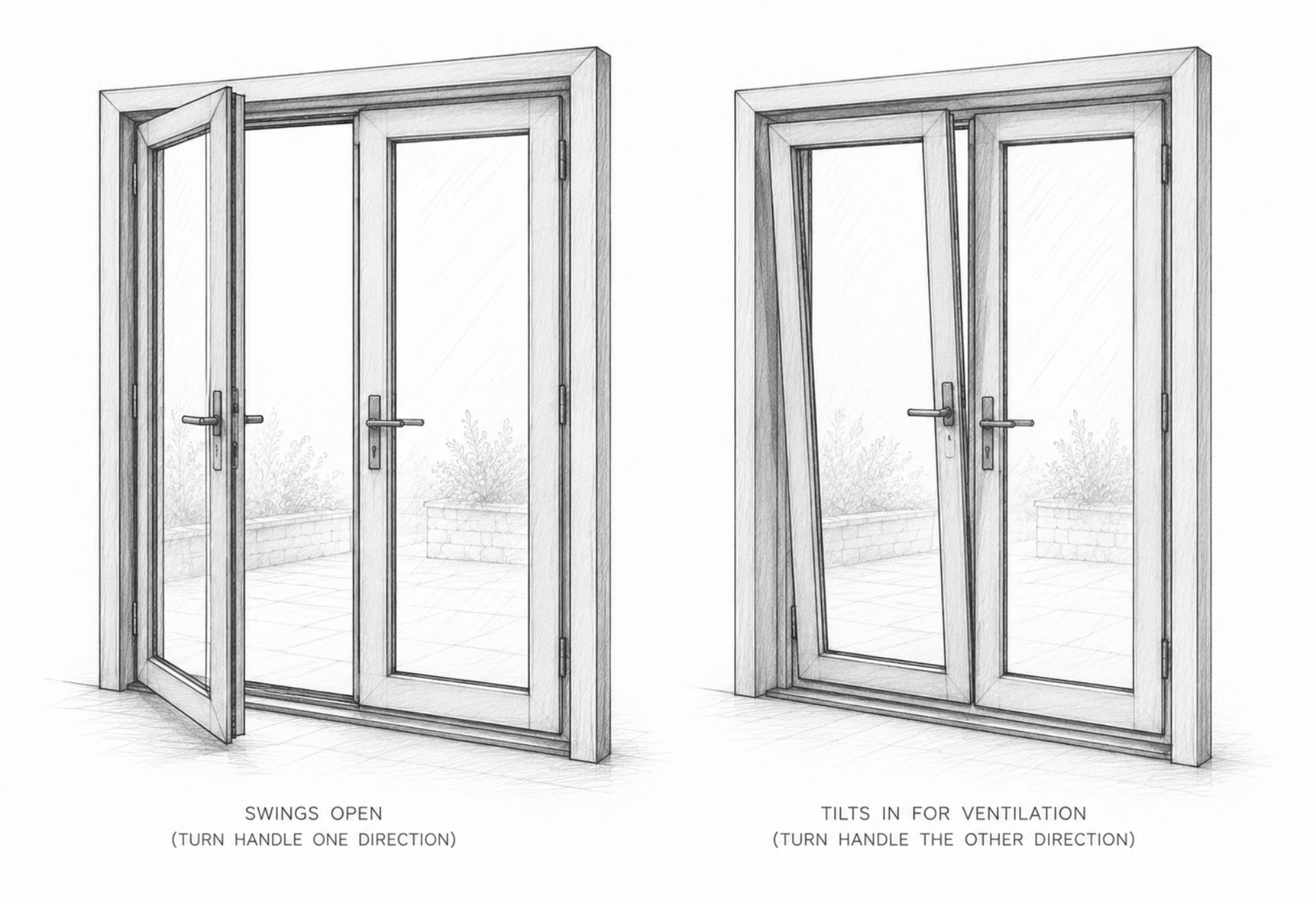
Tilt-and-turn French doors apply a dual-mode operation to each panel: turn the handle one direction and the panel swings open from the side like a standard door; turn it another way and the top tilts inward for controlled ventilation without fully opening. The mechanism is standard in European residential construction and available in PVC, aluminum, and wood.
The main advantage is precise ventilation control without compromising security, since a tilted panel cannot be pushed fully open from outside. The limitation is availability: tilt-and-turn French doors are outside the mainstream residential replacement market in the United States and typically require a specialty dealer.
Operable Sidelites
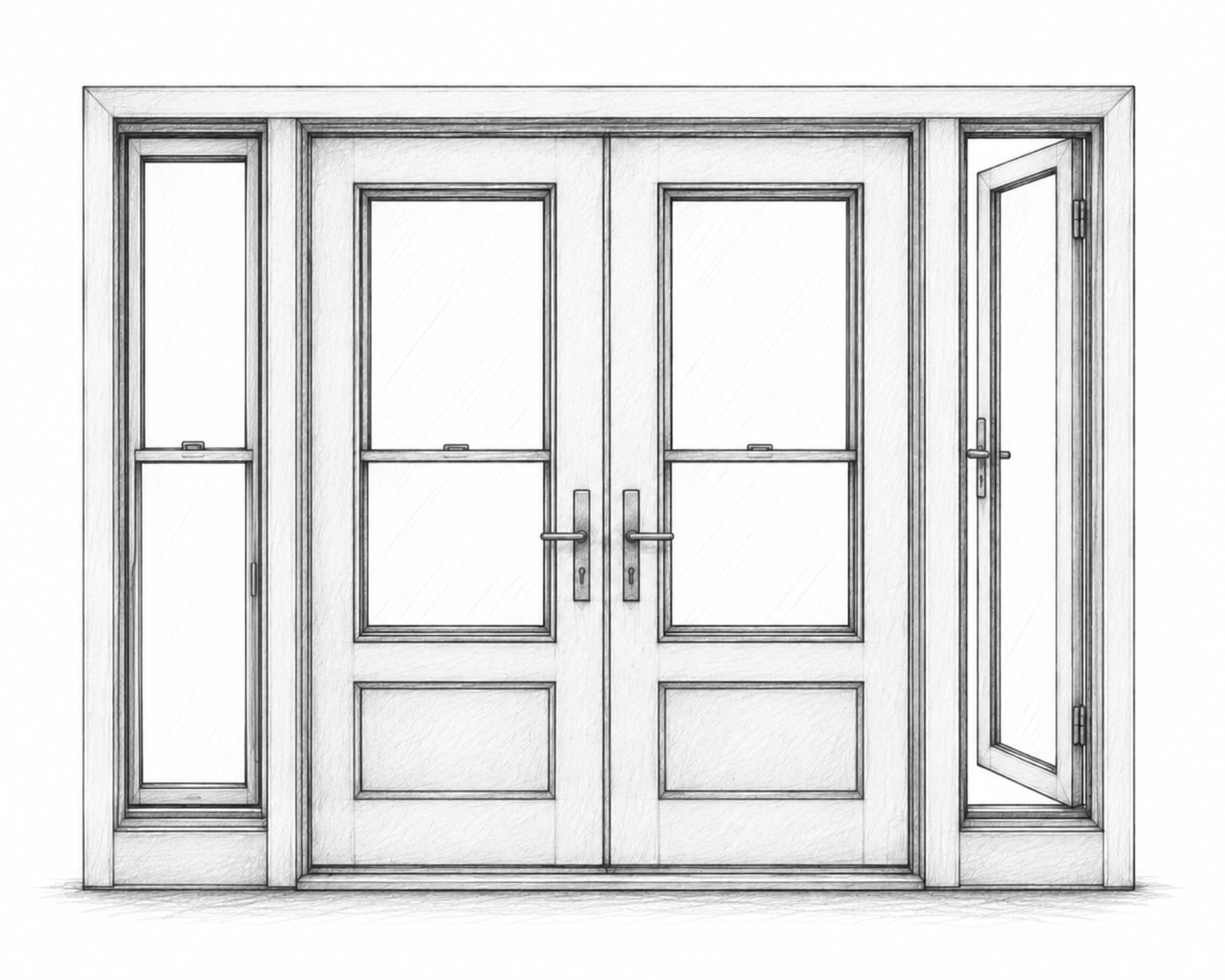 Sidelites are the narrow window panels that flank a French door on one or both sides. Most are fixed by default. Operable sidelite configurations open independently of the door panels and can be fitted with screens for bug-free airflow.
The advantage is ventilation at the sides of the opening without touching the door itself. The considerations are real: operable sidelites add complexity to the rough opening, need their own weatherproofing, and must swing in a direction that works with the surrounding wall space. Not every manufacturer offers them, so availability depends on your installer’s product lineup.
Operable Transoms
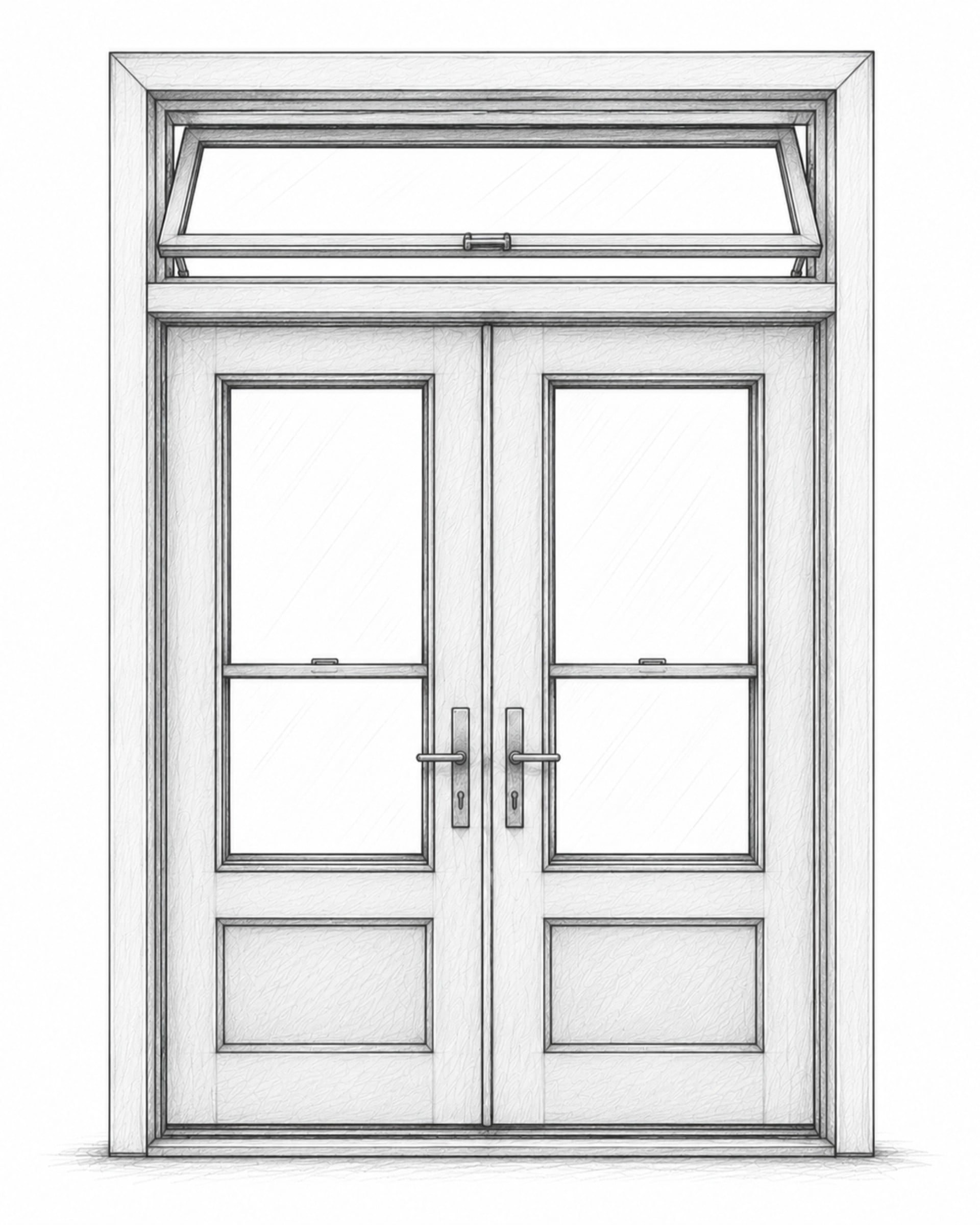
A transom is the window unit positioned above the door, either integrated into the frame assembly or installed separately above the head jamb. Most are fixed. Operable transoms use awning operation, hinged at the top and swinging outward at the bottom, directing airflow upward without opening the door panels.
This configuration works well in rooms with limited cross-ventilation or taller openings where you want airflow at the top of the wall. The practical consideration is access: a transom at the top of a tall opening may need a pole operator or extension hardware, which adds cost and some inconvenience in daily use.
Integrated Ventilation Screens
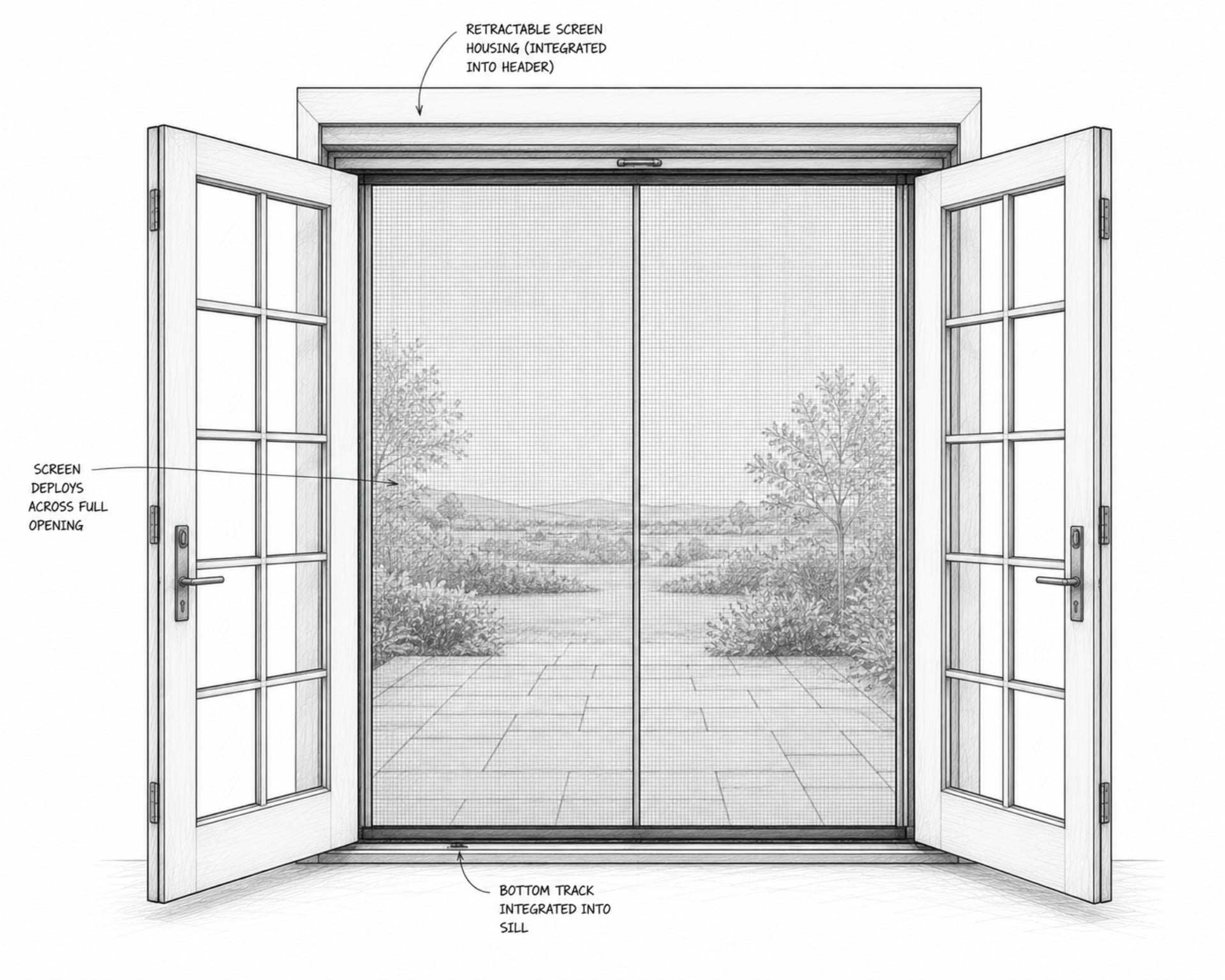
Some modern French door designs, sometimes marketed as “Magic” doors, feature built-in retractable screens that disappear into the frame when not in use. The screens deploy across the full opening when the door panels are open, keeping insects out while maintaining airflow.
The appeal is convenience: no separate screen panels to store or install seasonally, and the system is self-contained within the door frame. The limitation is that the screens require the door to be open to function, unlike operable sidelites or transoms that ventilate independently. Best for homeowners who use their French doors frequently and want a cleaner solution than add-on screen panels.

Schedule a Free Consultation
Get a free home window inspection, talk with one of our design consultants to get product recommendations, and learn about special offers and financing.
Choosing What’s Right for Your Home
The configurations above cover a wide range, from options readily available through any residential replacement dealer to those that require a specialty channel or custom fabrication. Which one fits your home depends on your ventilation goals, your opening dimensions, and how much of the surrounding wall you have to work with.
- You want ventilation without opening the door panels. Operable sidelites and operable transoms are both practical solutions, and both are available through residential replacement channels. Sidelites give you airflow at the sides of the opening; transoms give you airflow at the top. Either can be paired with screens. The better choice depends on your wall space, your opening height, and where you want the airflow directed.
- You want the door panel itself to ventilate without swinging fully open. Tilt-and-turn is the configuration designed for that purpose. It requires finding a specialty dealer who carries it, but it exists as a finished product and functions well in that role.
- You were picturing individual glass panes within the door panel that open independently. This configuration is not widely available through residential replacement dealers. True operable lites are found primarily through custom fabricators and historical restoration specialists. If that’s what you want, it can be sourced, but expect more time and cost than a standard replacement project.
If you are weighing French doors against other patio door configurations more broadly, or thinking about how a French door fits into a contemporary home design, those questions are worth working through before you settle on a specific configuration.
French Doors We Install in the Seattle Area
Lake Washington Windows and Doors carries two French door lines for Western Washington homeowners: the Anlin Malibu Series and the Milgard C700 Series. Both are built for the Pacific Northwest climate and installed with our Leak Armor commercial-grade installation system.
If you are ready to explore your options, request a complimentary in-home consultation, and we will walk you through what configuration makes sense for your home and opening.