This guide walks through the full range of decisions involved in choosing a contemporary patio door. It covers configuration types, frame profiles, glass and grid options, hardware, and energy performance, as well as how to match the door to your home’s architecture and the most common mistakes to avoid.
What Makes a Patio Door Look Contemporary
Contemporary design is less a catalog of specific features and more a way of thinking about proportion, material, and detail. The modern style principles that shape a contemporary patio door come down to a few consistent categories.
- Large glass area: Contemporary design favors as much glass as the opening and the wall can support. Slim frame profiles maximize glazing by giving up less of the rough opening to the frame, and a no-grid or minimal-grid configuration keeps that glass visually uninterrupted.
- Door configuration: The type of door determines how the glass behaves and how much of it you get. Sliding doors keep the glass in a fixed plane. Folding and stacking systems remove it from view entirely when open. Slim frame profiles maximize the glass area regardless of configuration.
- Restrained ornamentation: Traditional patio doors often feature decorative grids, elaborate hardware, and frame profiles with pronounced molding. Contemporary doors strip those details away to a clean perimeter, hardware that does its job without calling attention to itself, glass that fills the frame from edge to edge, and minimal window treatments, if any at all.
- Integration: A contemporary patio door should feel like a deliberate part of the wall it occupies, not an afterthought inserted into it. That means frame color and profile need to relate to the surrounding cladding, the hardware needs to be consistent with other exterior fixtures, and the configuration needs to be proportional to the opening.
Which Patio Door Configuration Fits a Contemporary Home
Contemporary design puts glass first, and configuration determines how much of it you get and how it performs. Each configuration has a different relationship to contemporary design principles, which is why it’s the first decision to make, not a detail to settle after you have chosen a finish.
Sliding Glass Doors in a Contemporary Home
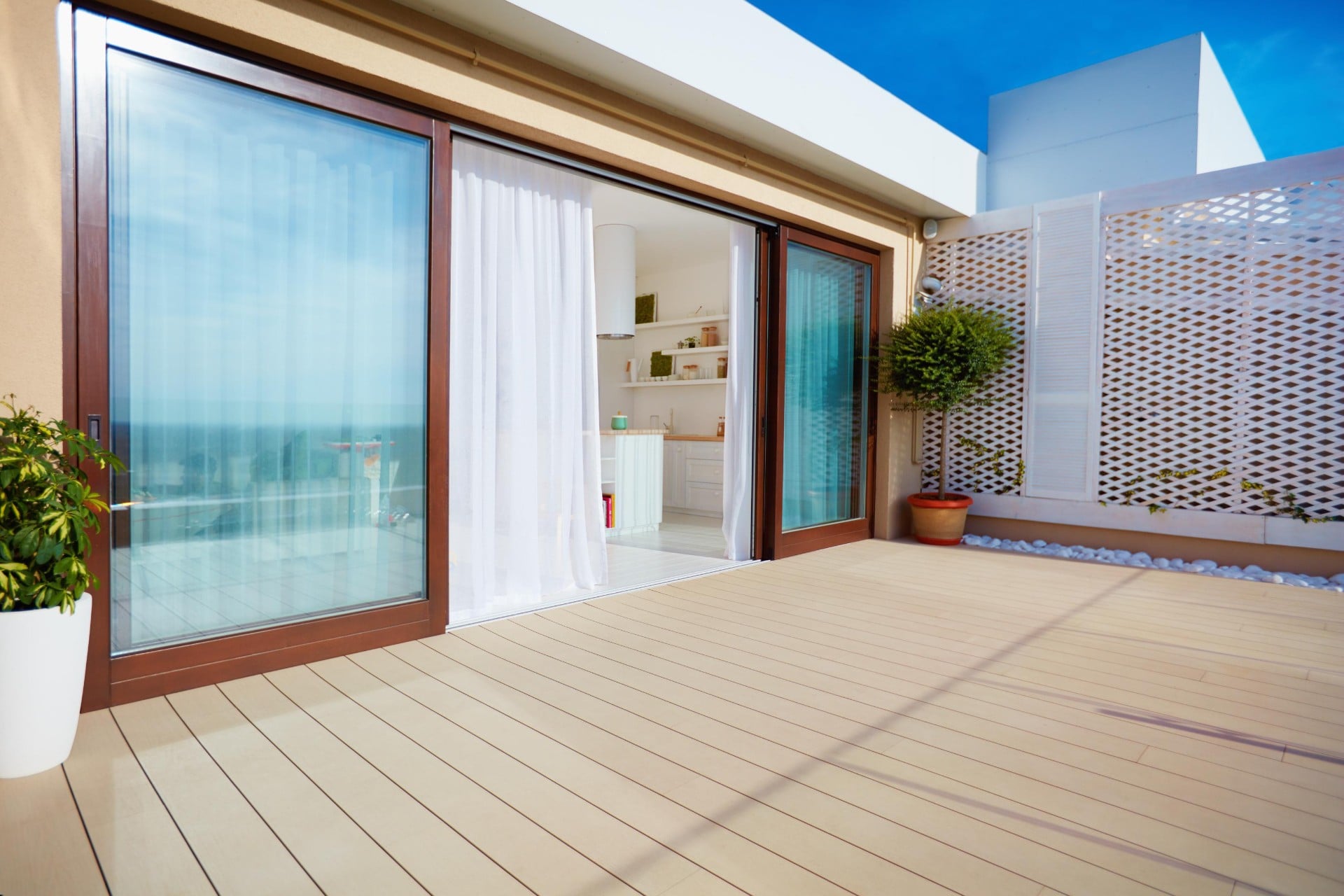
Sliding patio doors are the most common patio door configuration. In a contemporary home, a well-made sliding door with a slim frame profile delivers a large glass area without requiring a wide or structurally complex opening. This includes floor-to-ceiling sliding glass doors, which pair naturally with the clean lines of contemporary architecture and can be installed without major structural work.
Folding and Stacking Glass Wall Systems
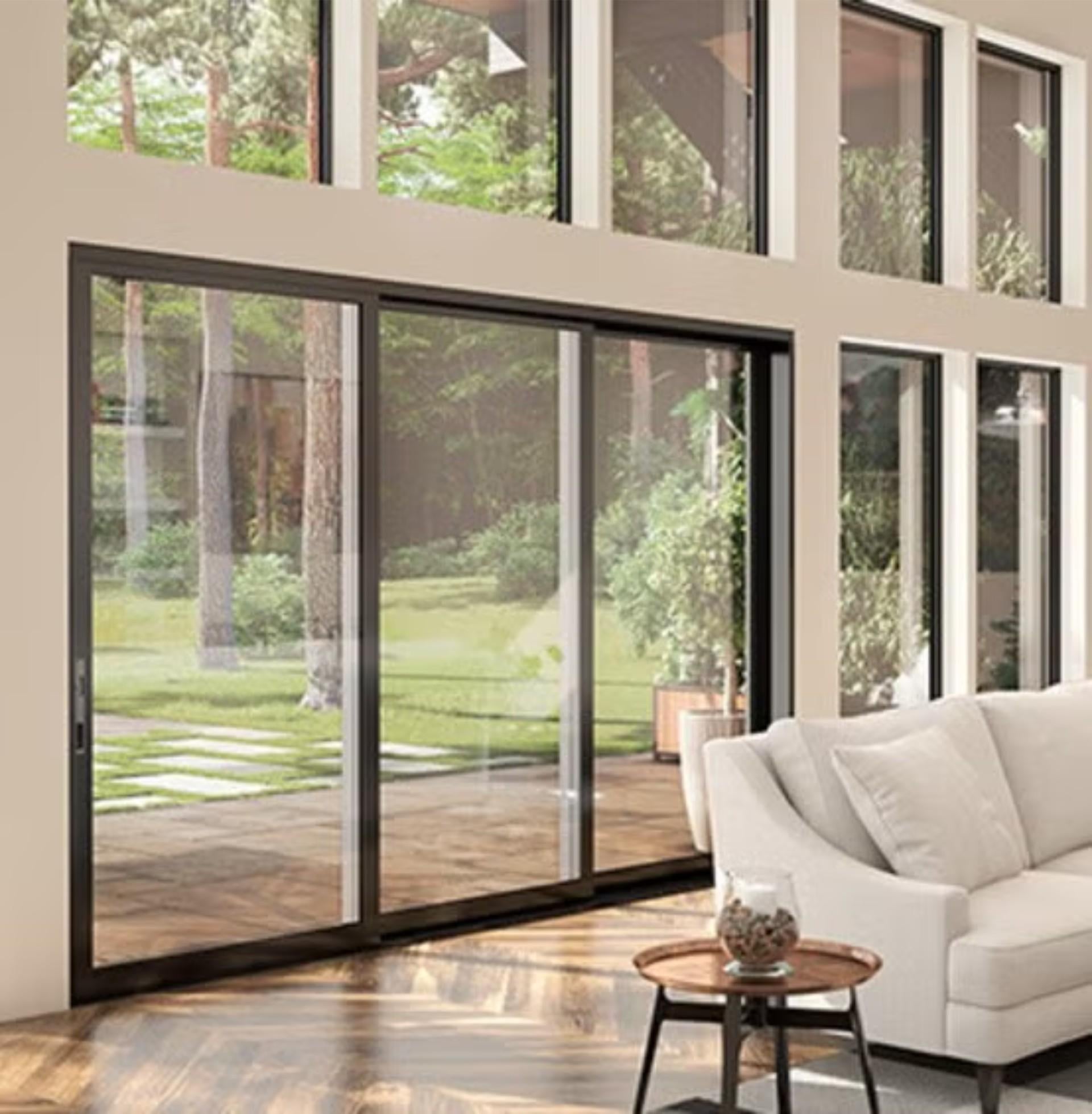
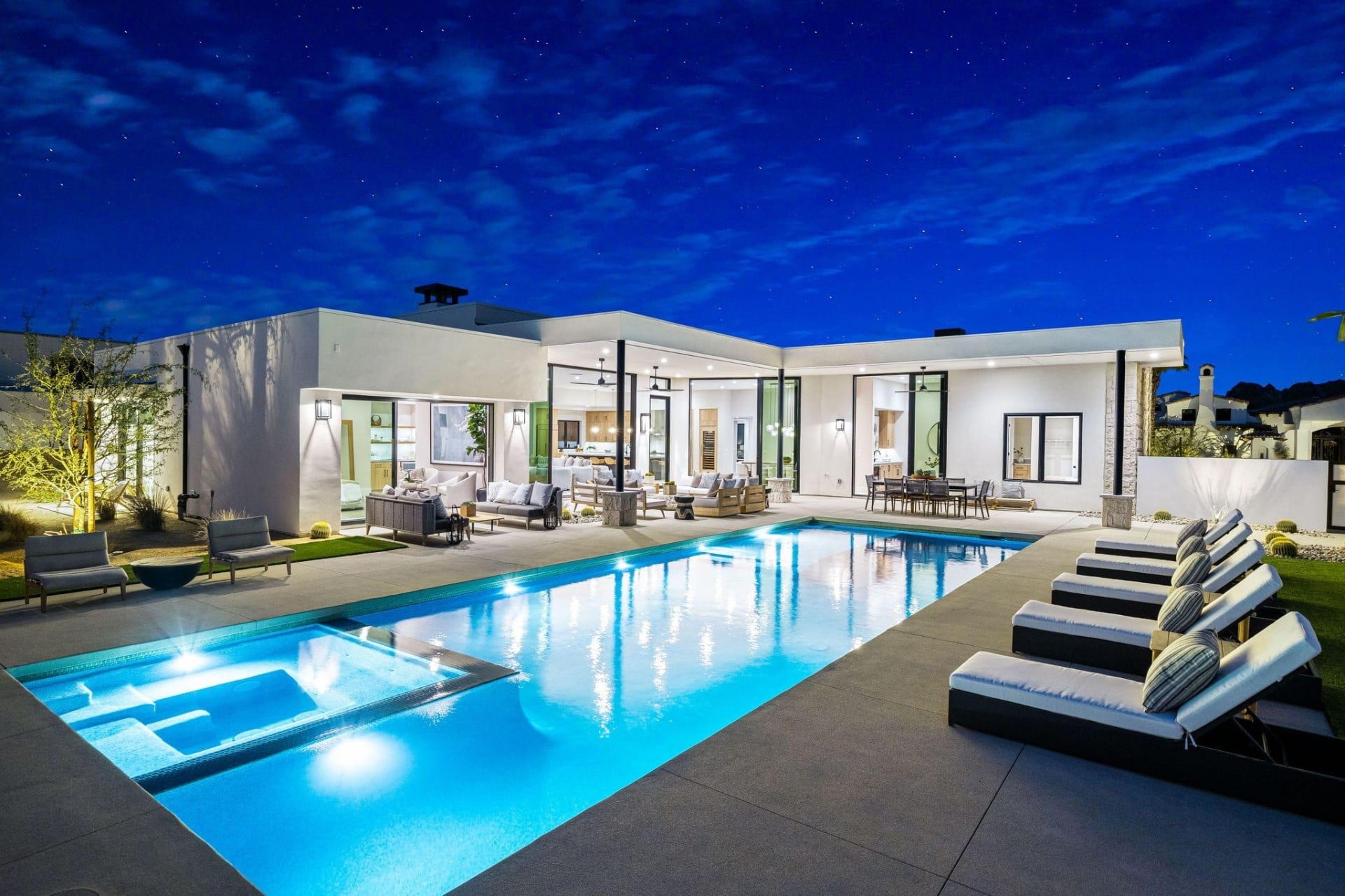
Folding, multi-slide, and stacking systems are the most contemporary configurations available. When open, the panels fold or slide completely out of the way, bringing in fresh air and creating a seamless transition between interior spaces and the outdoors. These systems work best in larger openings and in homes where indoor-outdoor living is a genuine priority. Large patio doors require more planning, more structural preparation, and more budget than a standard sliding door, but nothing else produces the same result.
French and Hinged Doors in a Contemporary Setting
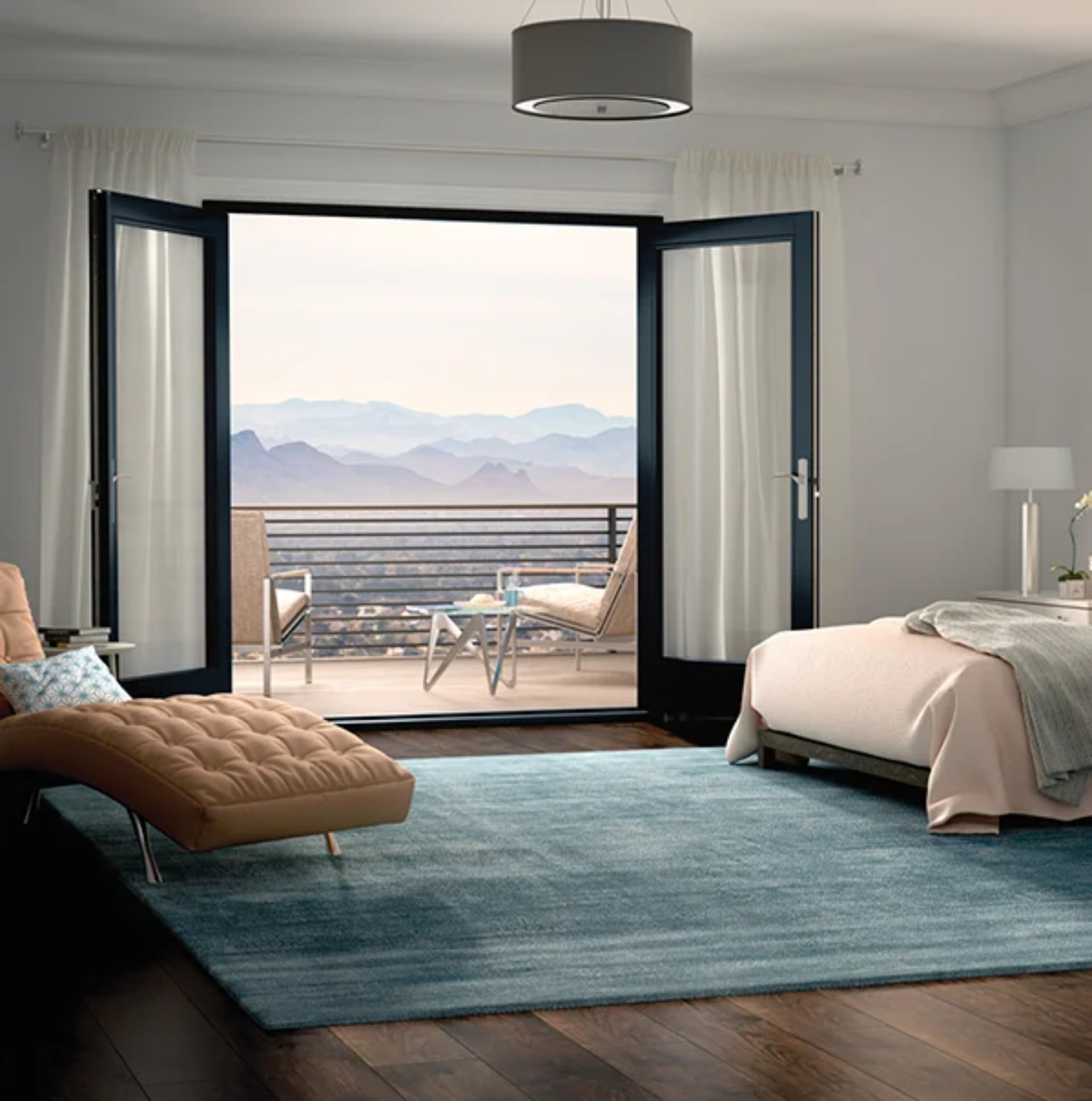
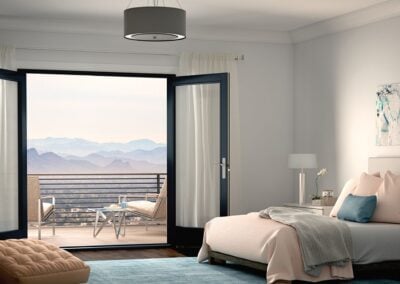
French and hinged doors are not the instinctive choice for a contemporary home, but they can work. The key is choosing slim frame profiles, dark or neutral finishes, no grids, and minimalistic hardware. On a home with some transitional character, a well-chosen hinged door can hold its own. On a home that leans heavily traditional in its detailing, it will more naturally reinforce that character than challenge it.

Schedule a Free Consultation
Get a free home window inspection, talk with one of our design consultants to get product recommendations, and learn about special offers and financing.
Contemporary Patio Door Frame Profiles and Finish
Frame choice does more design work in a contemporary door than most homeowners expect. In a traditional door, the frame is often part of the decorative program. In a contemporary door, it either recedes or it competes.
Slim vs. Standard Frame Profiles
Slim profiles are almost always the right frame choice for a contemporary home. A standard-profile frame takes up more of the opening, which means less glass and a more visible border around it. A slim-profile frame pulls back and lets the glass dominate. On a large opening, the difference is substantial. On a smaller opening, it can be the detail that determines whether the door reads as contemporary or merely neutral.
Choosing a Finish That Reinforces the Contemporary Look
Frame color is where a contemporary door announces itself most clearly. The finishes that work best offer aesthetic versatility across a range of exterior materials while creating definition without decoration.
| Finish | Character | Works Well With |
| Matte black | Bold contrast without ornamentation; the dominant choice in contemporary residential design | Light cladding, natural wood, and concrete |
| Bronze and dark bronze | Warmer and slightly more transitional than black | Wood-toned cladding, brick, and natural stone |
| Slate and dark neutral tones | Softer than black or bronze, suits complex palettes where strong contrast would compete | Mixed materials, multicolor, or busy exteriors |
White and beige frames are not wrong, but they carry strong associations with traditional and builder-grade design. On a contemporary home, they tend to flatten the look rather than sharpen it.
Energy Performance in a Glass-Heavy Design
A common concern with glass-dominant design is energy performance. Most people assume that a mostly glass door is less energy efficient than a well-insulated wall. That concern is legitimate but increasingly outdated.
The gap between a high-performance patio door and an insulated wall panel has narrowed to the point where glass-heavy design is viable in most climates. Modern patio doors use double-pane and triple-pane glass, low-emissivity coatings, and argon gas fills to reduce heat transfer dramatically. The result is a door that is genuinely energy efficient.
What matters is specifying the right glass package for the installation. Not all Low-E coatings are the same. The right glass package depends on the climate in which the door is installed. In colder climates, coatings that prioritize heat retention are the standard choice. In warmer climates, blocking solar gain becomes the priority.
For a measurable baseline on energy efficiency, look for ENERGY STAR certification for the relevant climate zone. For a more precise picture, ask for the door’s U-factor and solar heat gain coefficient and compare them against the requirements for your region.
Patio Door Hardware for a Contemporary Home
In a traditional door, hardware is often a decorative feature. In a contemporary door, the goal is for hardware to be present without being noticed. The door should function cleanly, and the glass should remain the primary visual element.
- Home style: A contemporary door works best on homes that already follow contemporary architecture principles, from a new build to a mid-century modern home with clean sightlines and minimal exterior detail. On a traditional or transitional home, profile, finish, grids, and hardware all need to be more restrained to avoid a visible mismatch.
- Finish: Match or closely coordinate the hardware finish with the frame color. Mixing a black frame with bright chrome hardware undermines the consistency that the overall design depends on.
- Lock and latch visibility: Multipoint locking systems that integrate into the door’s profile are preferable to surface-mounted locks that interrupt the clean edge of the frame. If the lock mechanism is visible from the exterior, it should be as low-profile as possible.
Ready to Explore Contemporary Patio Doors for Your Home?
A contemporary patio door is the product of several decisions made in the right order: configuration, frame profile, finish, glass package, and hardware. Each one affects the others, and the best results come from working through them together rather than in isolation.
Lake Washington Windows and Doors carries a curated selection of contemporary patio door systems, including sliding doors, folding glass wall systems, and French doors from ProVia, Milgard, and WinDor. Request a complimentary in-home consultation, and we’ll help you brainstorm patio door ideas and find the perfect fit for your home.