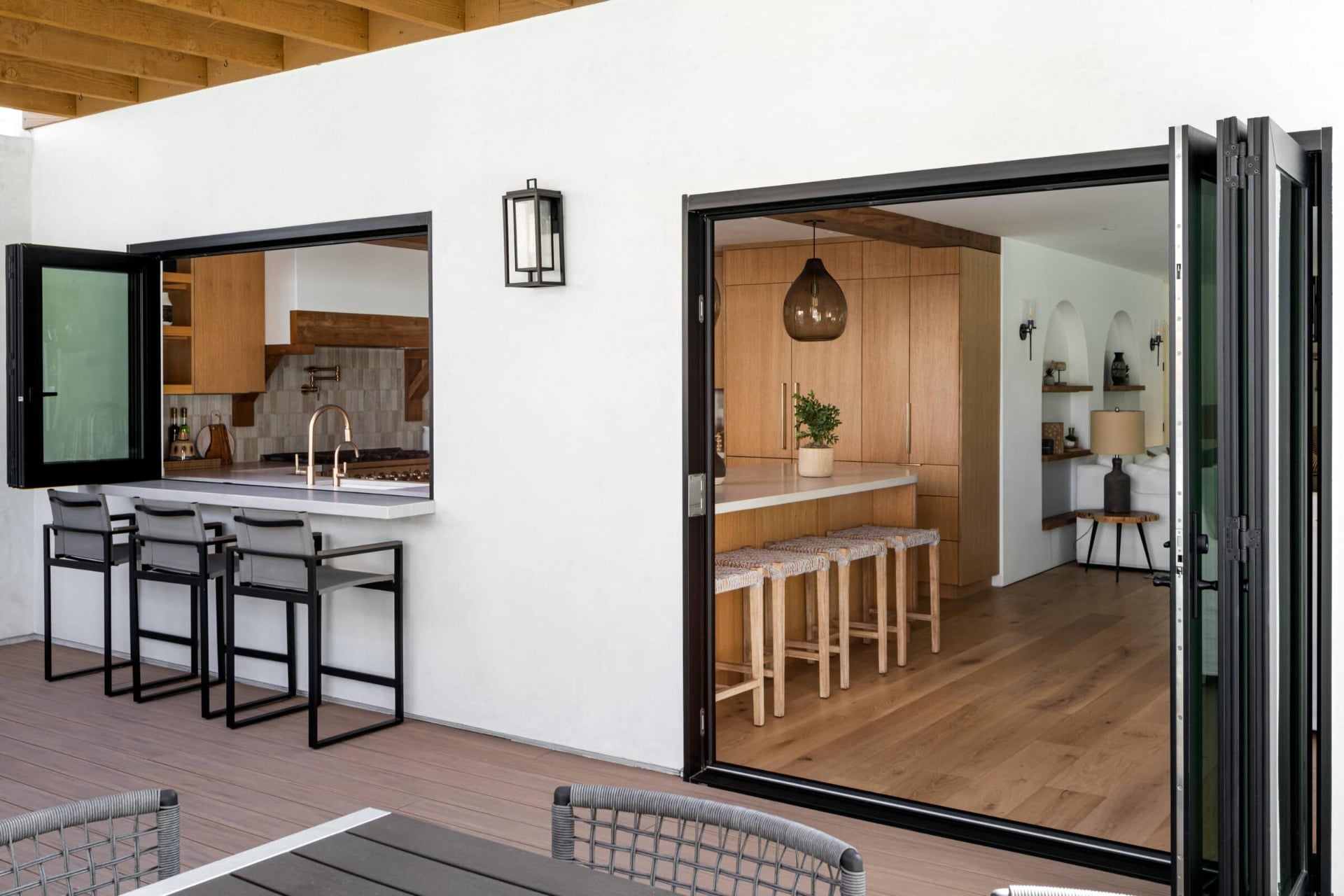
Bi-fold sliding patio doors have become a sought-after upgrade. The appeal is straightforward: a wall of glass that folds completely out of the way, opening your home to the outdoors with nothing in between. For the right home and the right project, that result is genuinely hard to match. Before committing to bi-fold sliding patio door installation, it’s worth knowing the situations where they’ll perform best for you.
Where Bi-Fold Doors Are Genuinely Hard to Beat
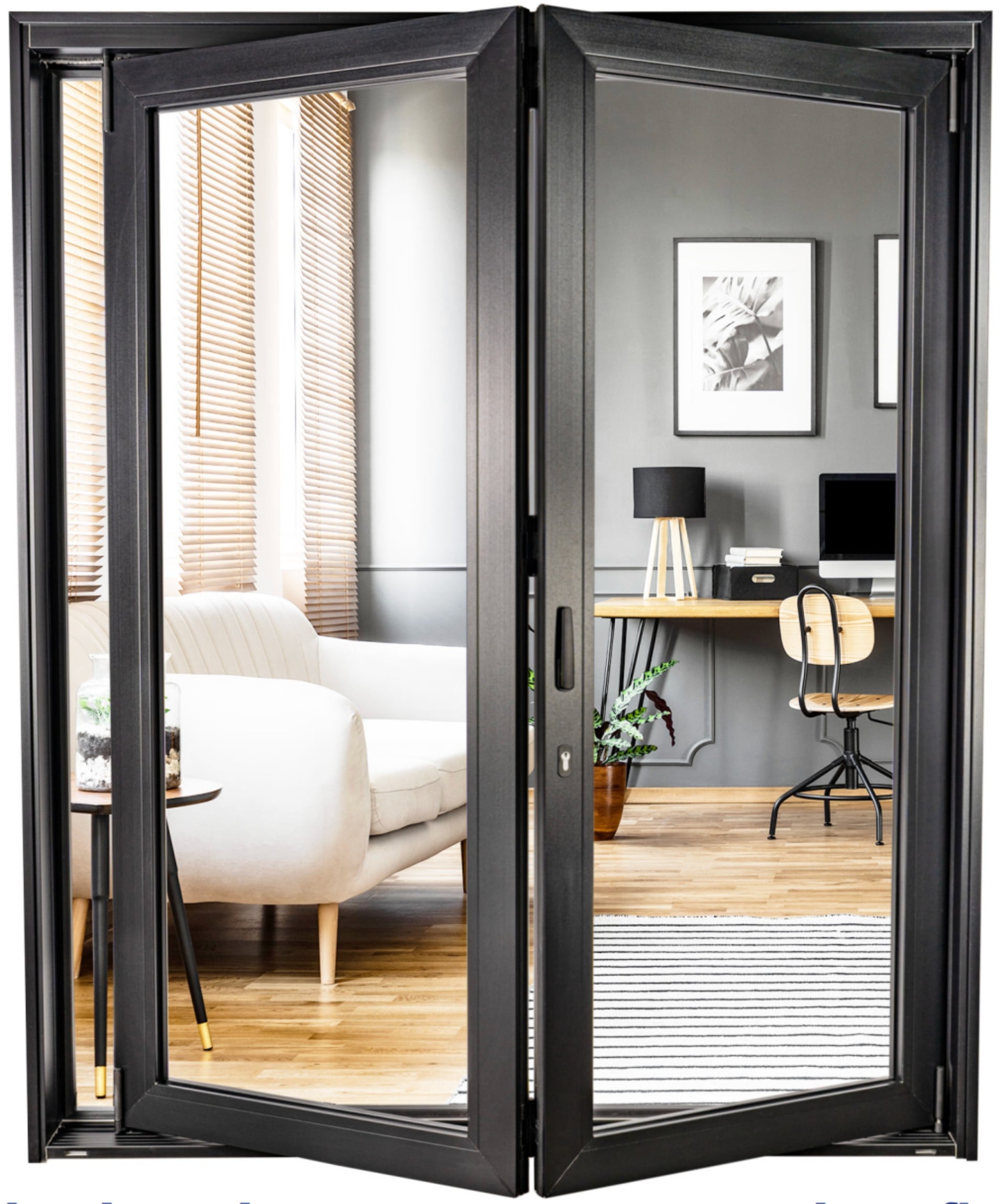
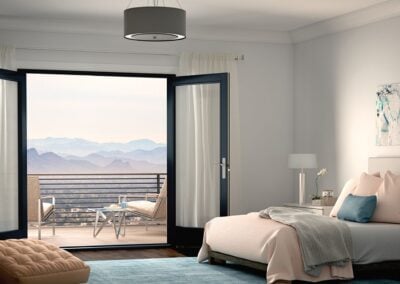
A bi-fold patio door system uses multiple hinged panels that fold accordion-style and stack to one or both sides of the opening. When fully open, the entire span becomes a single unobstructed passageway between your interior and outdoor space. No fixed panels, no track to step over. That full-width opening is what separates bi-fold doors from every other patio door type, and it’s what makes them the right answer in the right conditions:
- Full-width entertaining spaces. When the goal is to merge an interior living area with an outdoor space completely, no sliding or stacking system provides the unobstructed opening that a bi-fold system offers.
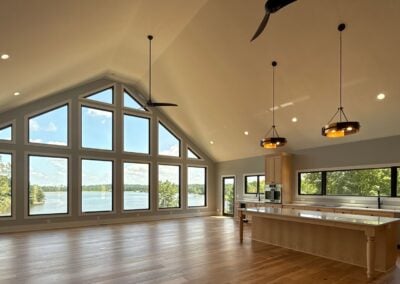
- Homes with significant views. A wall of glass that disappears entirely puts nothing between you and the view. Fixed panels and stacking tracks always leave something in the frame.
- Corner configurations. Bi-fold panels can fold away from a corner opening in two directions, producing an open-corner effect that sliding and stacking systems cannot replicate.
- Projects where indoor-outdoor living is a primary design goal. When the connection between spaces is the point, not just a feature, bi-fold is the system built around that intention.
When Bi-Fold Doors May Not Be the Right Fit
Bi-fold doors are the right answer for some projects, but not all. The situations below are where we suggest homeowners consider a different door type.
Not Enough Wall Space to Stack the Panels
When a bi-fold door opens, the panels have to go somewhere. They fold and compress against one or both sides of the opening, and they need unobstructed wall space to do it. If a window, a column, or other structural element interrupts your planned opening, the door can’t open all the way, which defeats the entire reason to install one.
This comes up more often than most homeowners expect, particularly on projects where the opening is positioned in a corner, between two rooms, or near a fireplace. Before committing to a bi-fold system, the wall space on either side needs to be evaluated as carefully as the opening itself.
You’re Unlikely to Use the Full System Regularly
Bi-fold door systems are a significant investment, and that investment pays off when the full opening is used regularly. The vision of a wall of glass folding away is compelling, but if you’ll rarely use all the panels, the cost of these systems is harder to justify. We highly recommend sitting with and considering how you will actually use your patio opening before buying.
You Aren’t Prepared to Invest in Quality Installation
Bi-fold systems have more hinge points, more panel-to-panel seams, and a more complex sill and track system than any other patio door type. Each of those details is a potential failure point if the installation isn’t handled correctly, and a bi-fold will show a poor installation faster and more expensively than a simpler door would.
Whoever installs it needs specific experience with folding door systems, not just general door installation experience, and that expertise should be factored into the project budget from the start. If the budget only has room for the door and not for a high-quality installation process, that’s a signal to reconsider the door type, not to cut corners on the install.

Schedule a Free Consultation
Get a free home window inspection, talk with one of our design consultants to get product recommendations, and learn about special offers and financing.
What a Good Installer Should Evaluate Before Recommending Bi-Fold

Before any bi-fold door system is specified, a qualified installer should evaluate a defined set of site conditions. Wall space on both sides of the proposed opening needs to be measured against the panel stack depth. The structural situation above the opening needs to be assessed, not assumed. How the space gets used day to day is a relevant input, not an afterthought. And the floor conditions at the sill need to match what the system requires.
If an installer is ready to recommend a bi-fold system without walking through those questions, that’s worth paying attention to. The right door for a project only stays the right door if the site can actually support it, and sometimes that evaluation leads to a stacking glass wall system or another configuration that fits the project better.
Get a Straight Answer About Your Project
If you’re considering bi-fold sliding patio doors for your home in the Greater Seattle area, we’re happy to take a look at your space and give you an honest assessment of what will work.
Request a complimentary in-home consultation, and we’ll walk you through your options, including the door system we’d recommend and why, with no pressure and no guesswork.