Western Washington homes don’t get a lot of direct sun. For much of the year, the light here is soft, diffuse, and indirect, which makes thoughtful window placement more important than it is in sunnier climates. Clerestory windows are one of the most effective tools for pulling natural light deep into a home without sacrificing wall space or privacy. Here’s what they are, how they work, and what to think about if you’re considering them for your home.
What Are Clerestory Windows?
Clerestory windows are windows positioned high on a wall, above eye level, and typically close to the roofline. Unlike standard windows, they don’t frame a view. Their job is to bring light into a space from a high angle, allowing it to travel across ceilings and floors rather than lighting only the area immediately beside the wall.
They’re sometimes confused with transom windows, but the two serve different purposes. Transom windows sit directly above a door or window opening as part of that assembly. Clerestory windows are independent units mounted high on the wall, often spanning across an entire wall section or running as a continuous band just below the roofline. The word itself traces back to medieval cathedral architecture, where an upper story of windows lit the nave (where the congregation sits) from above. The residential version is a scaled-down application of the same idea.
Which Window Style Is Right for Your Home?
Not sure where to start with replacement windows? We will help you narrow it down. Answer a few quick questions about your home, style preferences, and project goals. Then, we will recommend the window style and product option that best fits your needs - whether you want more natural light, better airflow, improved energy efficiency, easier maintenance, or a fresh new look. At the end, you will get your personalized window recommendation plus access to an exclusive quiz offer toward your project.
Select all that apply.
Almost Done
Get Your Quiz Results
Enter your email address to see your recommended window style. We will also email you a copy of your results.
Why Do Clerestory Windows Work So Well in Western Washington?
In climates with strong direct sun, clerestory windows are often used to admit softer ambient light while blocking harsher light at eye level. That’s a useful feature in Southern California or Arizona. In Western Washington, the purpose shifts somewhat.
Under the overcast skies that define the regional climate for much of the year, the light available is already diffuse. The challenge isn’t blocking harsh sun; it’s capturing as much of that soft ambient light as possible and distributing it through the interior of the home. Clerestory windows are particularly well-suited to this because of their position. A high-mounted window catches light from a wider arc of sky than a standard window at eye level, which means it works harder on cloudy days when the light source is the entire sky rather than a single point.
Clerestory windows are also architecturally native to this region. Shed roofs, mono-pitch gables, and post-and-beam construction are common throughout King, Pierce, and Snohomish County, and these roof configurations naturally create the elevated wall sections where clerestory glazing sits most comfortably. Many mid-century homes in the Seattle area were built with clerestory bands as a deliberate design feature, and contemporary Northwest Regional architecture continues to use them for the same reasons.

Schedule a Free Consultation
Get a free home window inspection, talk with one of our design consultants to get product recommendations, and learn about special offers and financing.
What Clerestory Window Styles Are There?
Clerestory windows aren’t a single product type. The term describes a placement strategy, and the windows themselves can take several forms depending on the architecture of the home, the goal of the installation, and the wall or roof configuration available.
Continuous Horizontal Ribbon
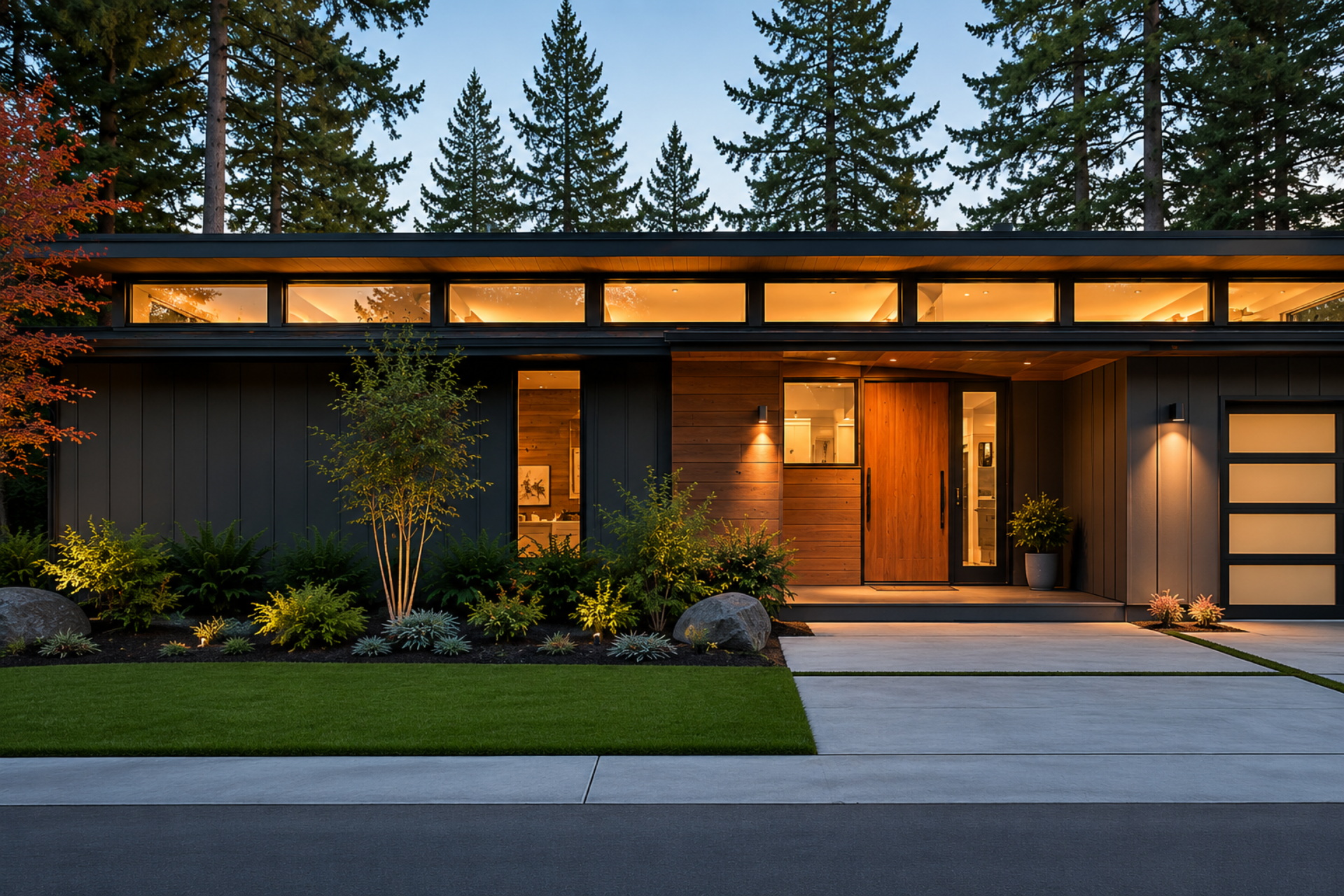
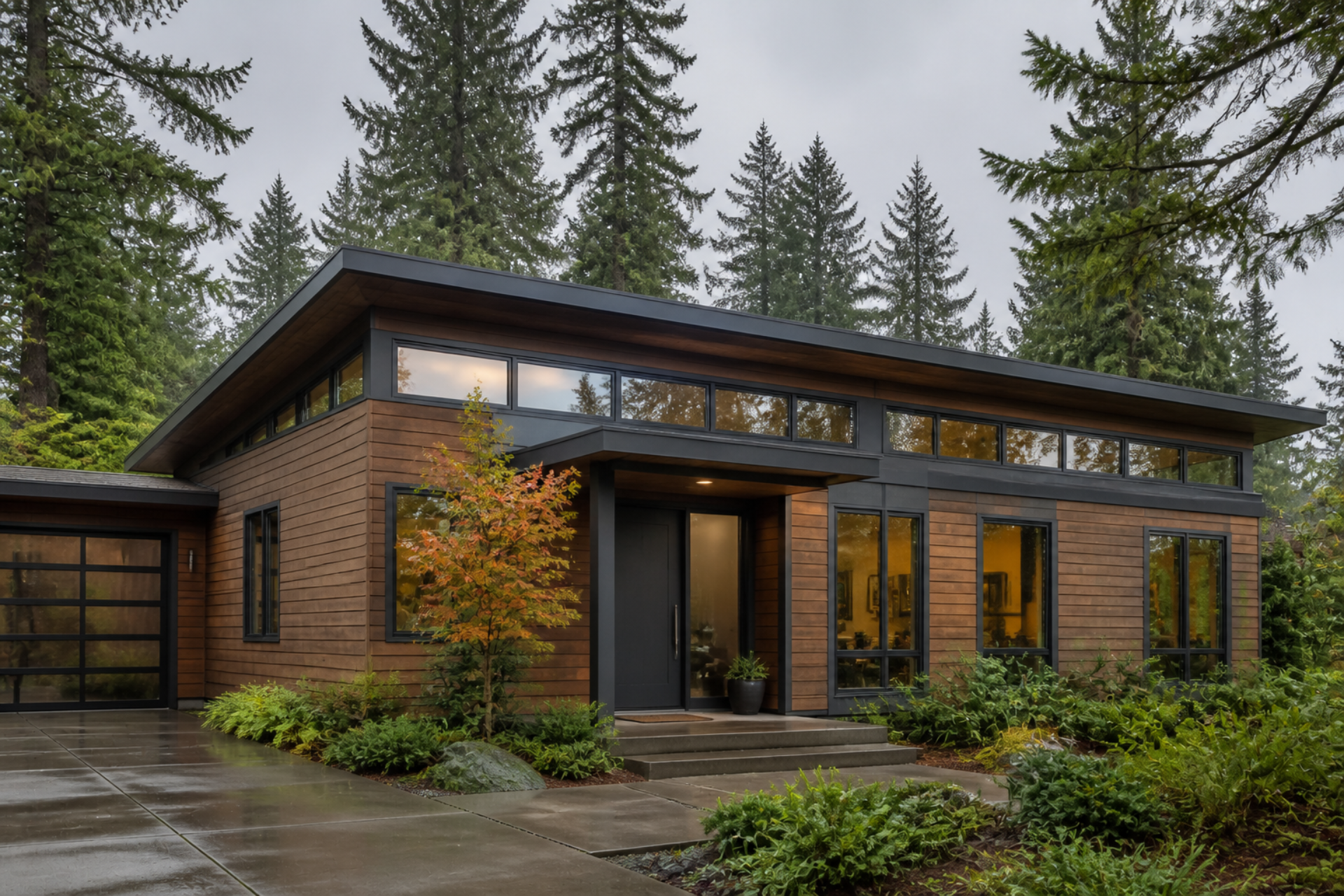
A ribbon clerestory is the most common residential configuration and includes a row of rectangular units running horizontally across the upper wall just below the roofline, typically spanning the full length of the wall section. This is the version most associated with mid-century modern homes and contemporary Northwest architecture, and it’s what most people picture when they think of clerestory windows. The continuous run creates an even band of light across the ceiling plane and gives the wall a strong horizontal emphasis that reads well from both inside and outside the home.
Individual Spaced Units
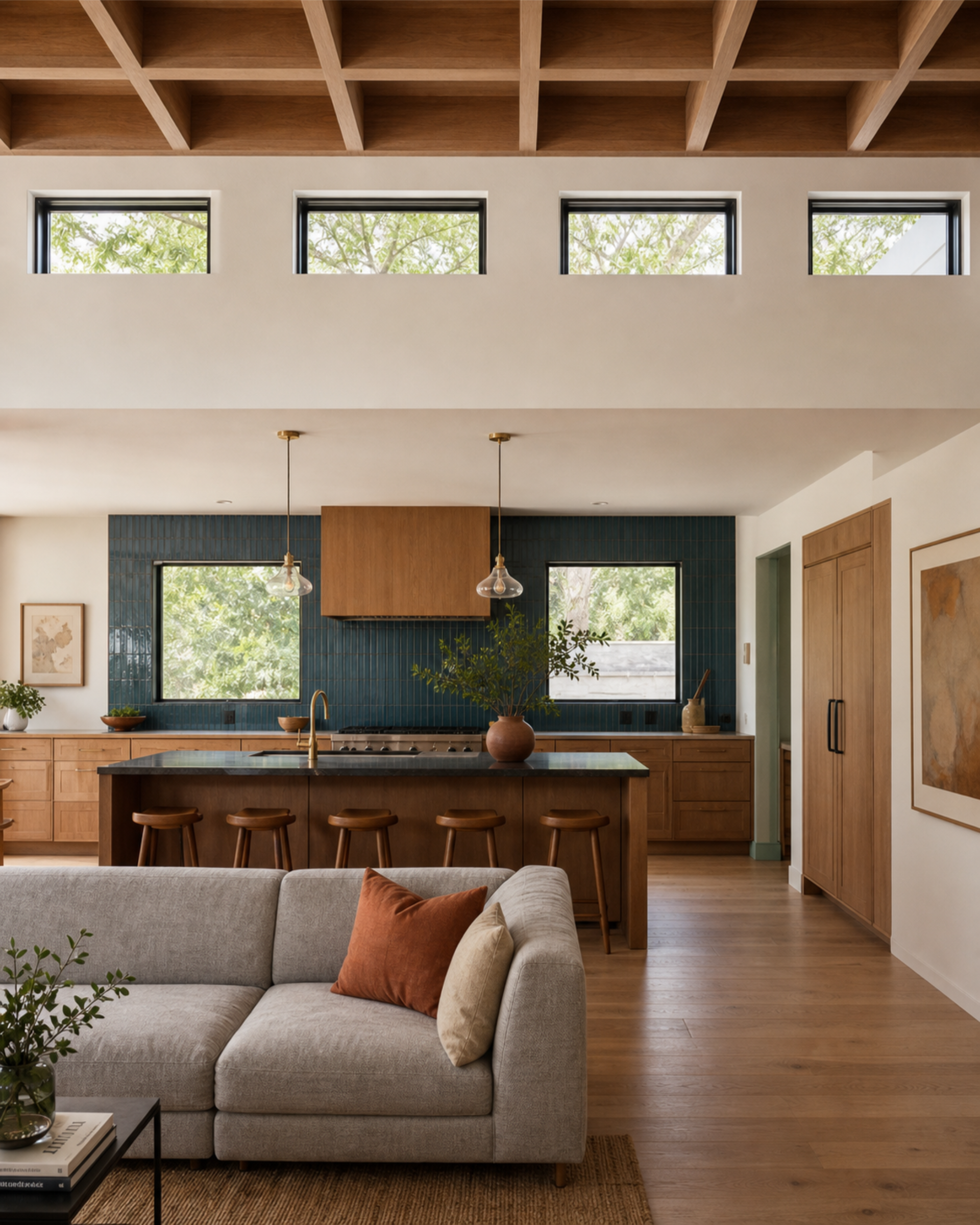
Where a ribbon isn’t structurally possible or where the home design calls for something less continuous, individual rectangular units can be distributed across the upper wall with gaps between them. This works well in rooms where structural members, posts, or beams interrupt the upper wall, or where the goal is to create distinct pools of light rather than an even wash. Spaced units also tend to be less visually dominant than a full ribbon, which makes them a good fit for rooms where the window isn’t meant to be the focal point.
Roofline-Following Profile
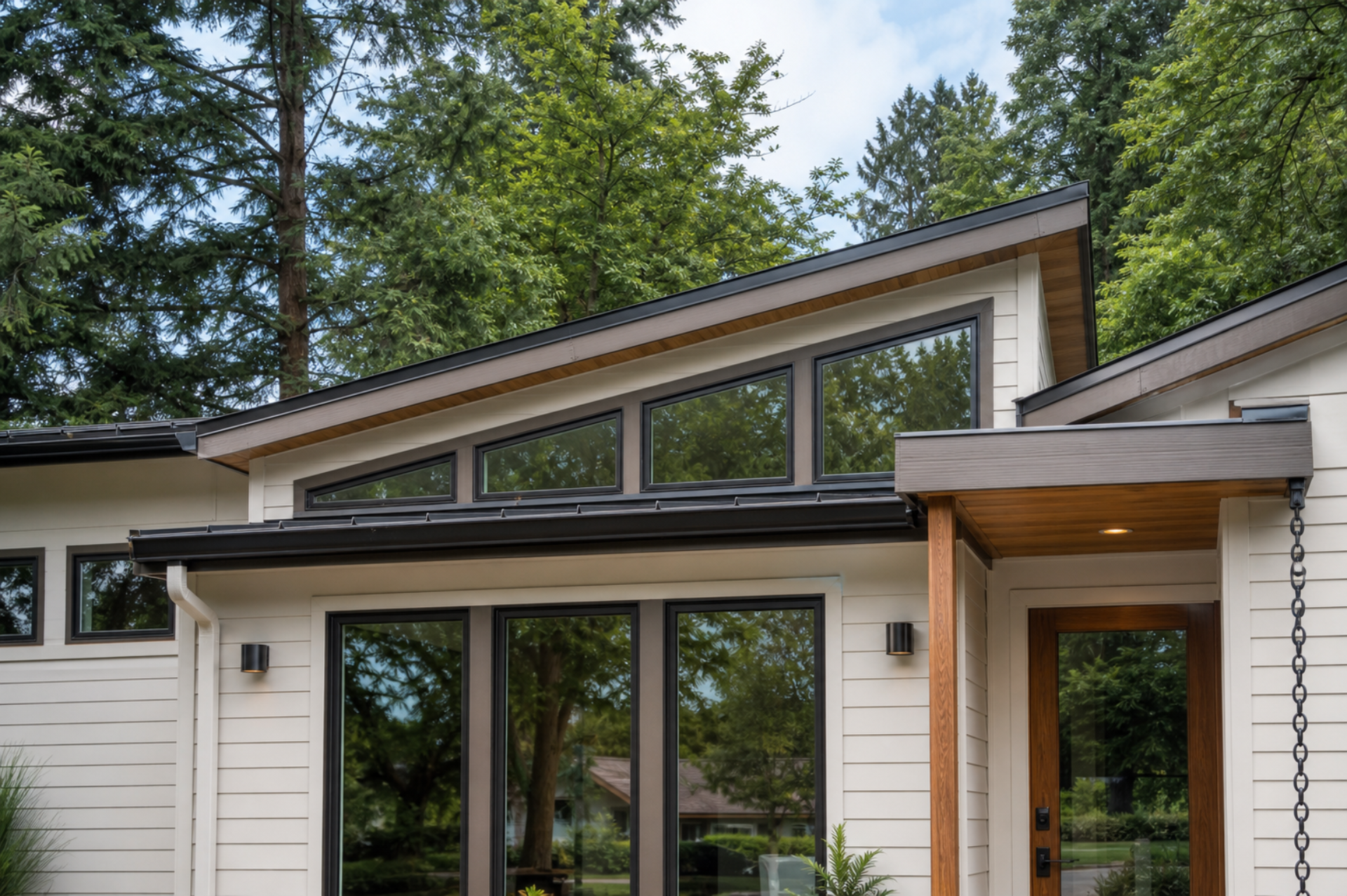
In homes with shed roofs or mono-pitch gables, clerestory windows can be set at the pitch of the roofline rather than as a horizontal band, creating a sloped or trapezoidal profile that follows the ceiling angle. This configuration is particularly common in Western Washington residential construction, where shed roofs are widespread. It tends to produce one of the more architecturally cohesive results because the window reads as part of the roof geometry rather than an addition to the wall. The effect from inside is a light source that appears to float along the ceiling slope.
Narrow Slot Windows
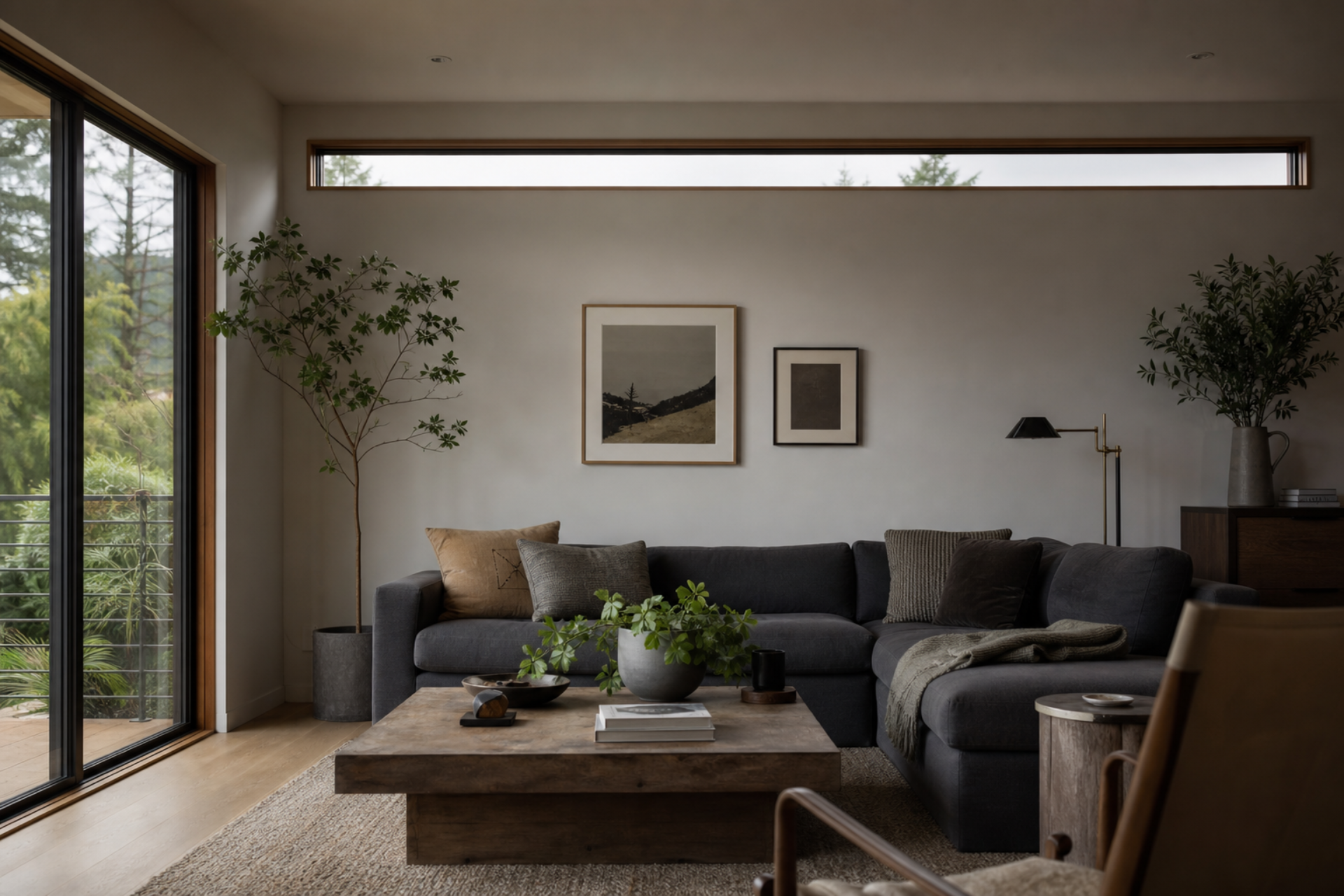
A thinner, more restrained version of the ribbon. Slot windows run horizontally along the upper wall but with a reduced height, sometimes as little as six to eight inches of glass, producing a precise line of light rather than a broad band. They’re used most often in hallways, bathrooms, stairwells, and contemporary minimalist designs where a full-height ribbon would be too visually dominant. In rooms where privacy is the primary concern and light is secondary, a slot window delivers both without requiring the visual commitment of a larger unit.
Perimeter Band
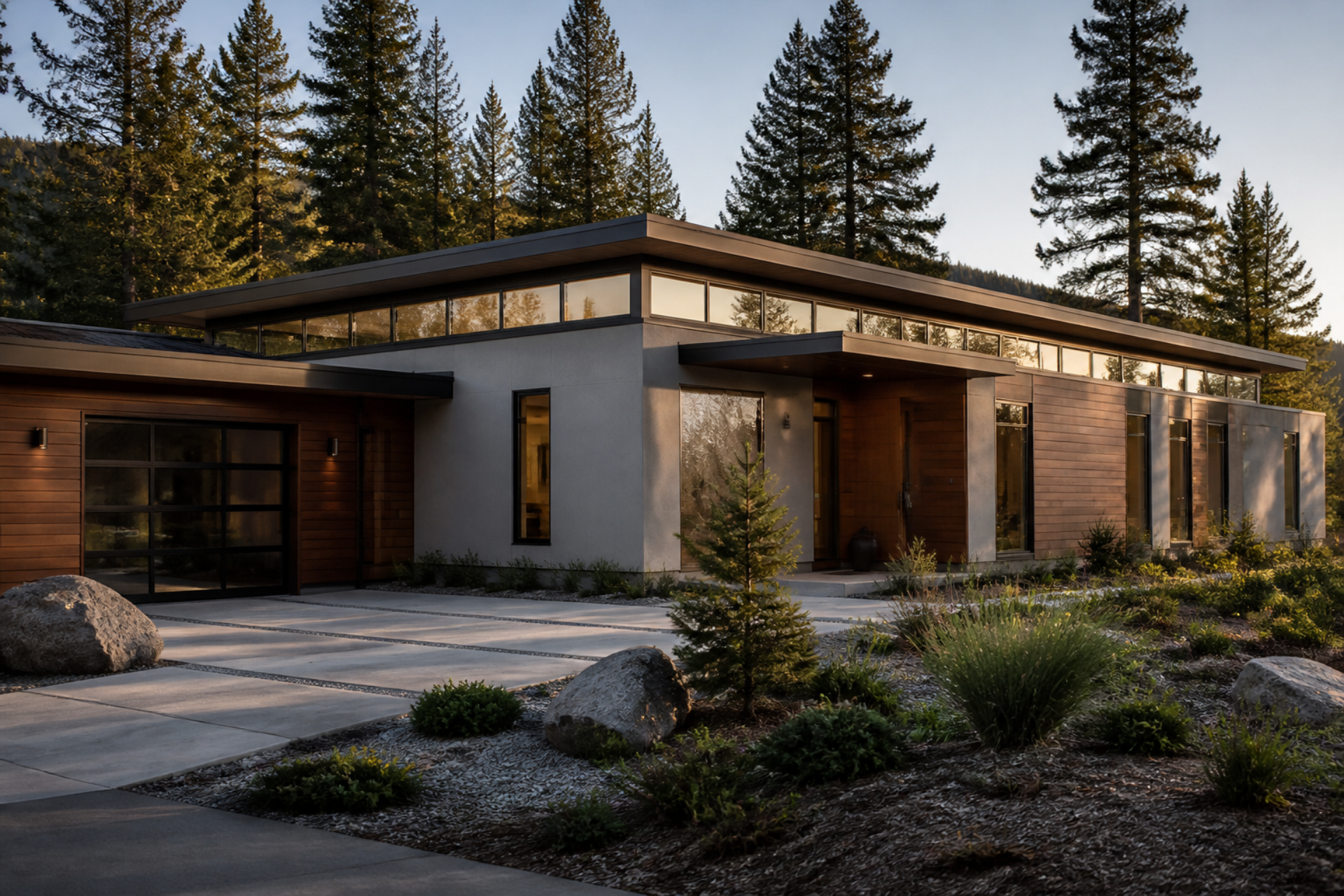
Rather than running along a single wall, a perimeter band wraps clerestory windows around multiple walls near the roofline, creating a continuous ring of light around the room. The effect is a ceiling that appears to float above the walls, disconnected from the structure below. This is more common in new construction or major additions than in standard replacement work, since it requires the upper wall on multiple sides of a room to be available for windows. When it works, the result is among the most dramatic available from a clerestory configuration.
Fixed or Operable: Which Is Right for Your Home?
The choice between fixed and operable shapes both the function and the long-term maintenance profile of a clerestory installation.
Fixed
Fixed clerestory windows don’t open, and for most installations, that’s the right choice. They’re simpler to waterproof, hold their air seal more reliably with no moving parts, and cost less per unit, which adds up for larger installations.
Operable
Operable units make sense when ventilation is part of the plan. Heat rises, so an operable unit near the ceiling releases warm air while drawing cooler air in through lower windows, a passive cooling strategy that works well in Western Washington summers. Since these windows sit out of reach, a motorized operator is almost always the more practical choice over a manual crank, and worth budgeting for upfront rather than retrofitting later. Awning windows, hinged at the top and opening outward, are the most common window style here since they keep rain out when open.
What’s Different About Replacing Clerestory Windows?
Replacing existing clerestory windows involves a few considerations that don’t come up with standard window replacement. If you’re planning a new clerestory installation, some of these same factors are worth thinking through before you commit.
- Access. Standard replacement windows can typically be removed and installed from inside the home at normal working heights. Clerestory units are eight to 12 feet up a wall, even higher in vaulted spaces, requiring scaffolding, lift equipment, or working from the roof plane. That affects both scheduling and labor cost and is worth discussing with your installer before finalizing the scope.
- Custom sizing. Clerestory openings in older homes, particularly mid-century construction throughout the Seattle area, are often non-standard dimensions. Unlike a transom replacement, where an off-the-shelf size frequently works, clerestory units often need to be custom-ordered to fit the existing rough opening. This adds lead time and means the measurement phase needs to be done carefully.
- Outsized performance impact. Heat loss is worst at the highest points of an exterior wall, which means an old single-pane or older double-pane clerestory unit affects thermal performance disproportionately to its size. Upgrading to Low-E coatings and argon gas fill addresses that directly and is one of the higher-impact window upgrades available in an existing home.
- Future serviceability. If you’re installing new clerestory windows now, frame material and operator systems affect how manageable replacement will be decades down the line. A well-specified vinyl or fiberglass unit from a manufacturer with strong warranty support is easier to service long-term than a custom aluminum assembly. Motorized operators should be chosen with accessible components and confirmed parts availability, not just immediate function.
Ready to Explore Clerestory Windows for Your Home?
Whether you’re replacing existing clerestory windows or considering adding them as part of a renovation, getting the details right matters more at this height than almost anywhere else on the exterior. At Lake Washington Windows and Doors, we’ve been installing windows across Western Washington since 2008, and we’re happy to walk you through what makes sense for your home, your roof configuration, and your goals. Request a complimentary in-home consultation, and one of our window experts will come to you.