Mid-century modern has become one of the most searched front door styles for a reason. The look is distinctive enough to make an entry feel intentional, but grounded enough in simple materials and clean lines that it translates across a wide range of homes. For homeowners replacing an entry door, it offers a clear alternative to traditional raised-panel designs without requiring a fully modern home to pull it off.
This guide covers 11 mid-century modern front door styles, from horizontal glass band doors to warm wood slabs, bold accent colors, and full-glass designs. Each entry describes what the door looks like and how to pair it with the exterior elements you are working with.
What Is Mid-Century Modern Design?
Mid-century modern emerged from the postwar residential architecture of the late 1940s through the 1960s. The style rejected decorative excess in favor of clean geometry, natural materials, and a strong visual connection between interior and exterior spaces. As an entry door, those principles show up in specific ways:
- Flush slab construction with no raised panels keeps the door surface flat and uninterrupted, letting the finish or wood grain carry the visual weight.
- Horizontal lines created by glass bands or surface grooves give the door direction and proportion without adding ornament.
- Natural wood tones or bold accent colors replace the neutral painted finishes common to traditional doors, making the entry a deliberate design choice rather than a background element.
- Bar-pull or lever hardware that contributes to the composition rather than sitting apart from it keeps the overall profile cohesive from top to bottom.
The style is defined as much by what it excludes as what it includes. Ornamental glass, arched tops, and carved panel details all belong to different design traditions. Mid-century modern doors are defined by their restraint.
11 Mid-Century Modern Entry Door Ideas
Mid-century modern doors vary more than the category’s simplicity suggests. The horizontal glass band door is the most recognizable version, but the style also includes warm wood slabs with minimal surface detailing, bold accent colors on flush panels, and glass-forward designs that dissolve the line between inside and outside. The entries below cover that full range, with notes on how each style pairs with the exterior elements that typically surround it.
1. Black Door With Stacked Horizontal Lites, Sidelites, and Transom
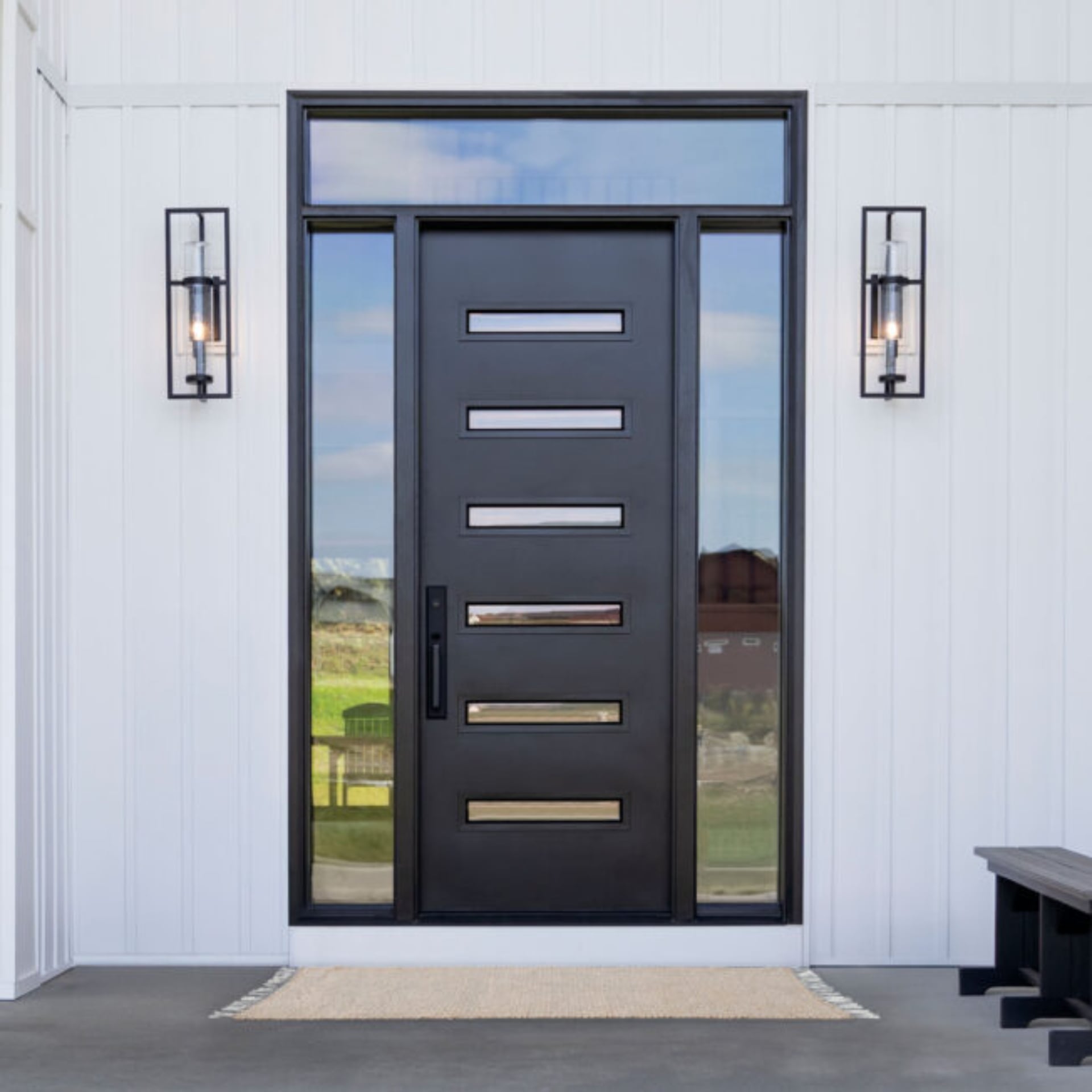
This entry pairs a black slab with six narrow horizontal glass lites stacked down the center, drawing the eye upward toward a full-width transom above. Two floor-to-ceiling sidelites frame the door on either side, bringing in substantial natural light while the smaller door lites maintain privacy. Matching black framing ties the door, sidelites, and transom into one unified opening rather than a door with accessories alongside it.
This configuration works best on homes with white or light-colored exteriors, where the contrast does the visual work. It suits entries with taller than standard clearance and is a practical choice for homeowners who want the presence of a large glass entry without sacrificing privacy.
2. Coffee Brown Inscribed Door on a Brick and Stone Exterior
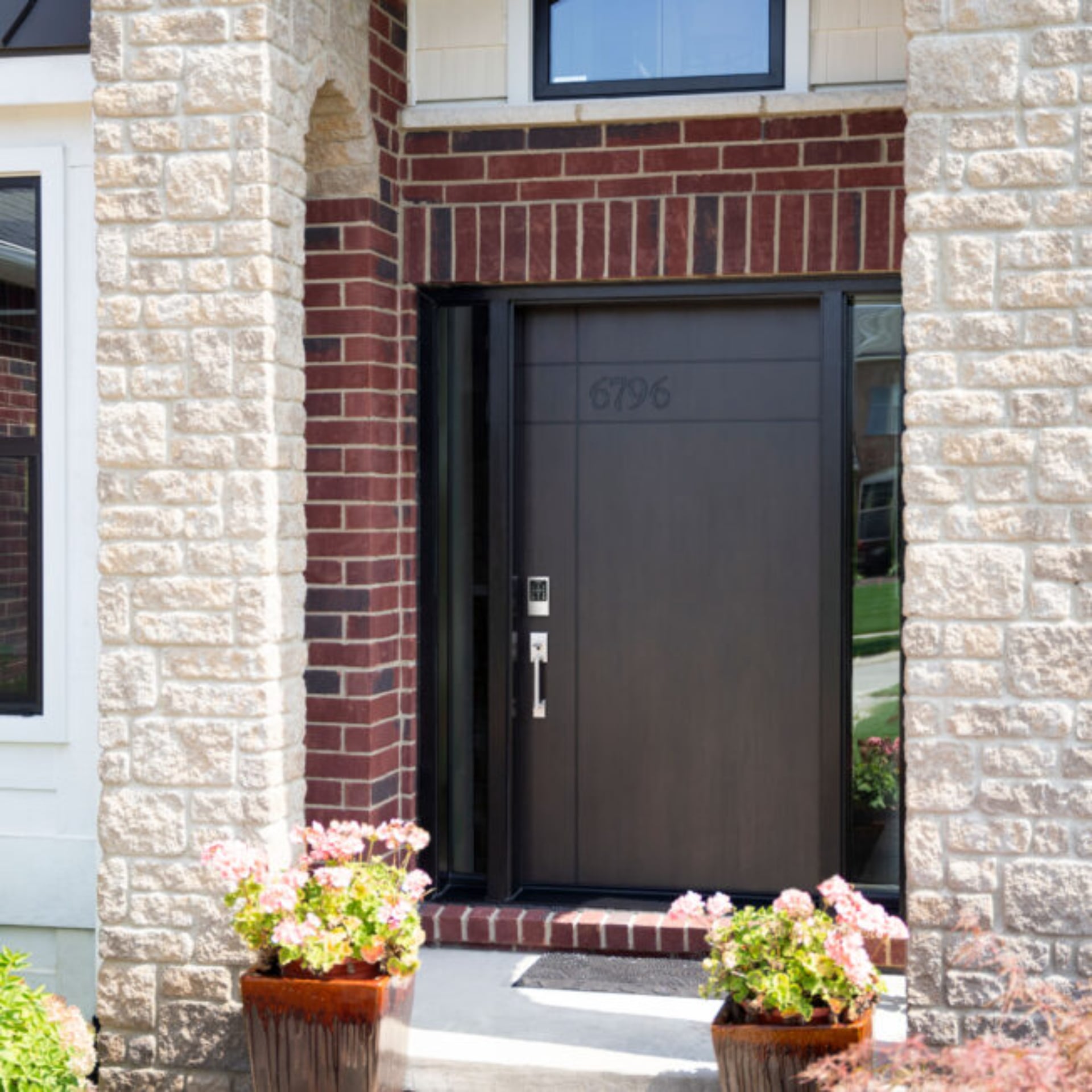
This deep coffee brown slab is nearly solid, with subtle horizontal and vertical inscribed grooves that add structure without breaking the dark surface. House numbers are mounted directly on the door, a detail that works because the flat, uninterrupted slab gives them room to sit cleanly. Brushed nickel hardware and a narrow sidelite to the right are the only breaks in an otherwise minimal composition. Surrounded by red brick and cream stone, the dark door creates a focal point that the varied exterior materials alone would not.
This pairing shows how a near-solid dark door can anchor a busy exterior. Homeowners with brick, stone, or mixed-material facades will find that a flat dark slab simplifies the entry without competing with the texture already present on the home.
3. Eucalyptus Green Door With Vertical Lite and Square Pull Bar
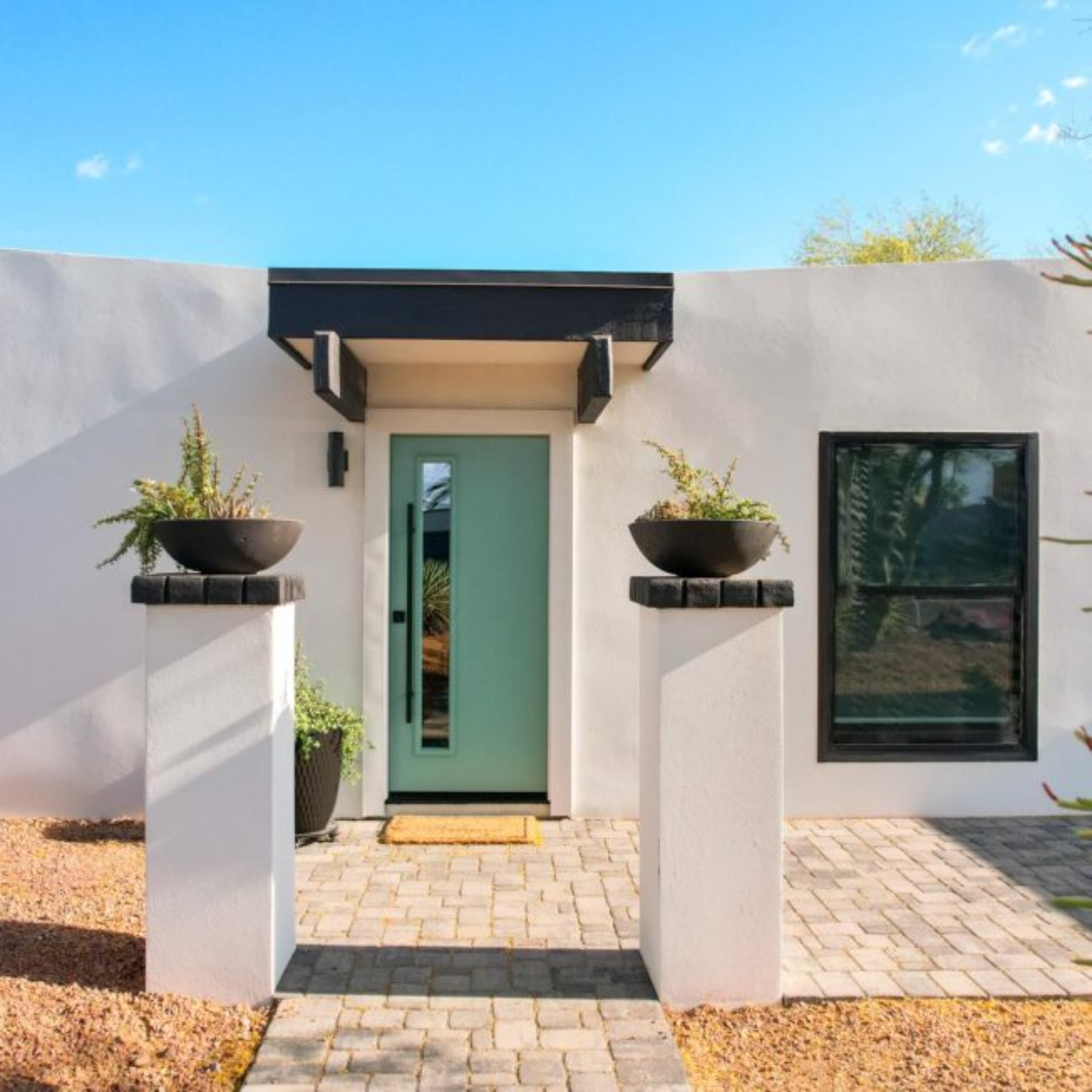
This flat-panel door in eucalyptus green carries a single narrow vertical lite offset toward the center of the slab, with a full-length square pull bar door handle as the only hardware. The glass panel runs nearly the full height of the door, allowing light through without opening up a wide view of the entry. Installed here on a flat-roof stucco home with a black steel canopy, the muted green against white stucco creates noticeable contrast without being aggressive.
This door suits homes where the architecture is already doing something distinctive, particularly flat-roof construction, smooth stucco, and minimal exterior trim. Homeowners with smooth painted siding will find that the full-length pull bar and simple lite placement translate well without competing with existing exterior details.
4. Flat-Panel Door With Horizontal Lites and Sidelites
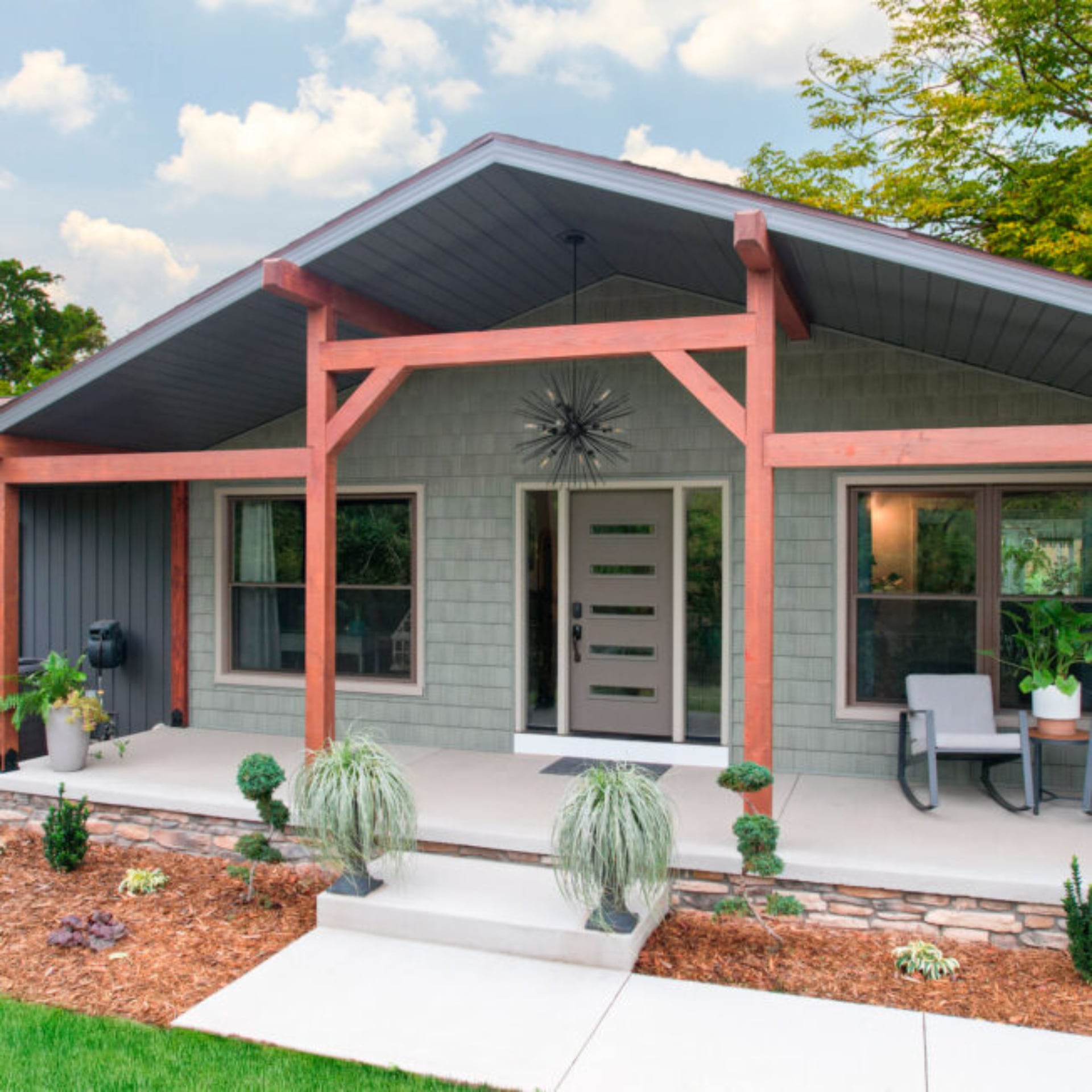
This flat-panel slab features four evenly spaced horizontal lites grouped in the center of the door, with two narrow sidelites on either side that carry the same framing color. The hardware is a slim lever handle paired with a keypad lock, both in a dark finish that contrasts against the light door.
This configuration suits ranch-style, farmhouse, and mid-century homes where the entry sits under a covered porch or overhang. The clay tone is versatile enough to work against green, gray, or tan siding, making it a practical choice for homeowners who want a modern door style without a high-contrast color commitment.
5. Wood-Grain Door With Inscribed Groove Detail
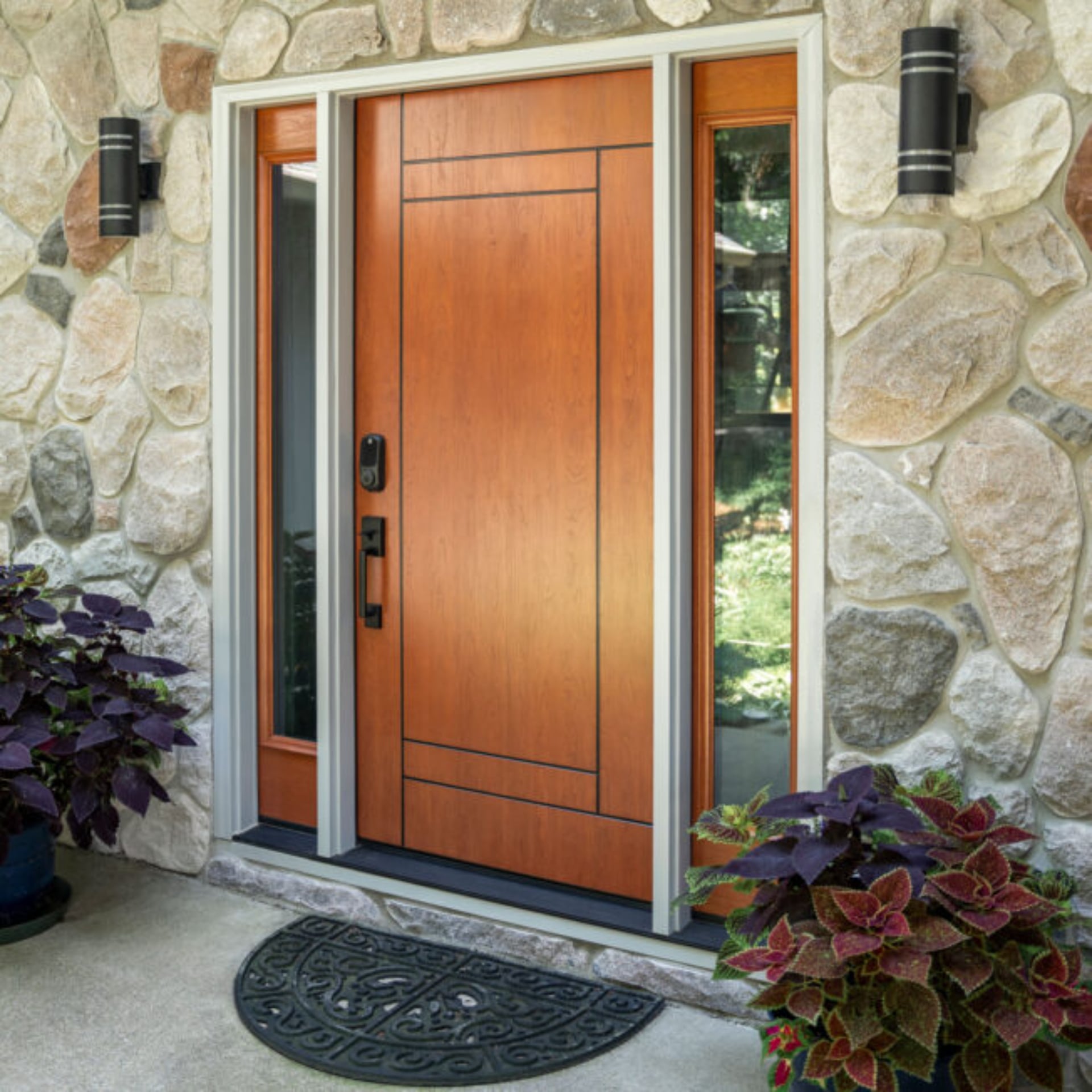
This warm cherry-toned door features a smooth wood-grain finish with thin, inscribed grooves. The horizontal and vertical pattern of the grooves creates panel definition without raised molding or glass. Two sidelites flank the door with matching wood-grain tops, framed in white that contrasts against the natural tone of the door. The hardware is oil-rubbed bronze, a finish that complements the warm wood tone without matching it too closely.
This door translates well to any home with natural material exteriors, including stone, brick, or wood siding. Homeowners who want the warmth of a wood door without the maintenance of real wood will find the inscribed groove detail adds enough visual interest to carry the entry on its own, without sidelites or glass.
6. Cherry Door on a Traditional Mediterranean Home
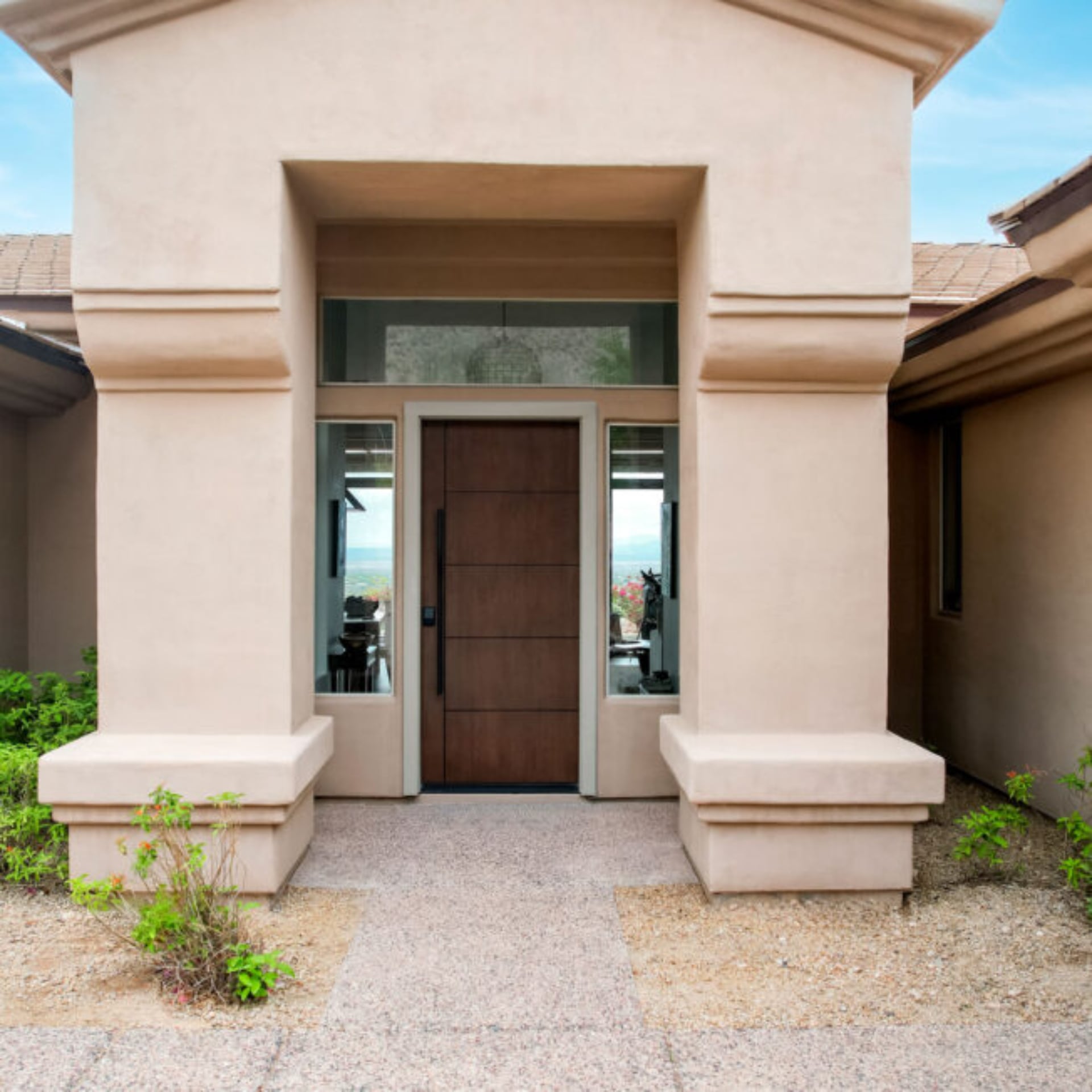
This cherry slab features horizontal inscribed grooves and a floor-length black square pull bar, flanked by two large clear sidelites and a full-width transom above. The home itself is a traditional Mediterranean-style stucco with ornate pilasters and classical detailing, an architectural style that would not typically pair with a mid-century modern door. The warm wood tone bridges the two directions, letting the door feel current without clashing against the home’s existing character.
This combination demonstrates that mid-century modern door styles are not limited to modern homes. Homeowners with traditional, Mediterranean, or Spanish-style exteriors can introduce a clean-lined wood door and find that the warmth of the finish does more to connect it to the existing architecture than the style difference does to separate it.
7. Bark-Colored Door With Horizontal Grooves and a Square Pull Bar
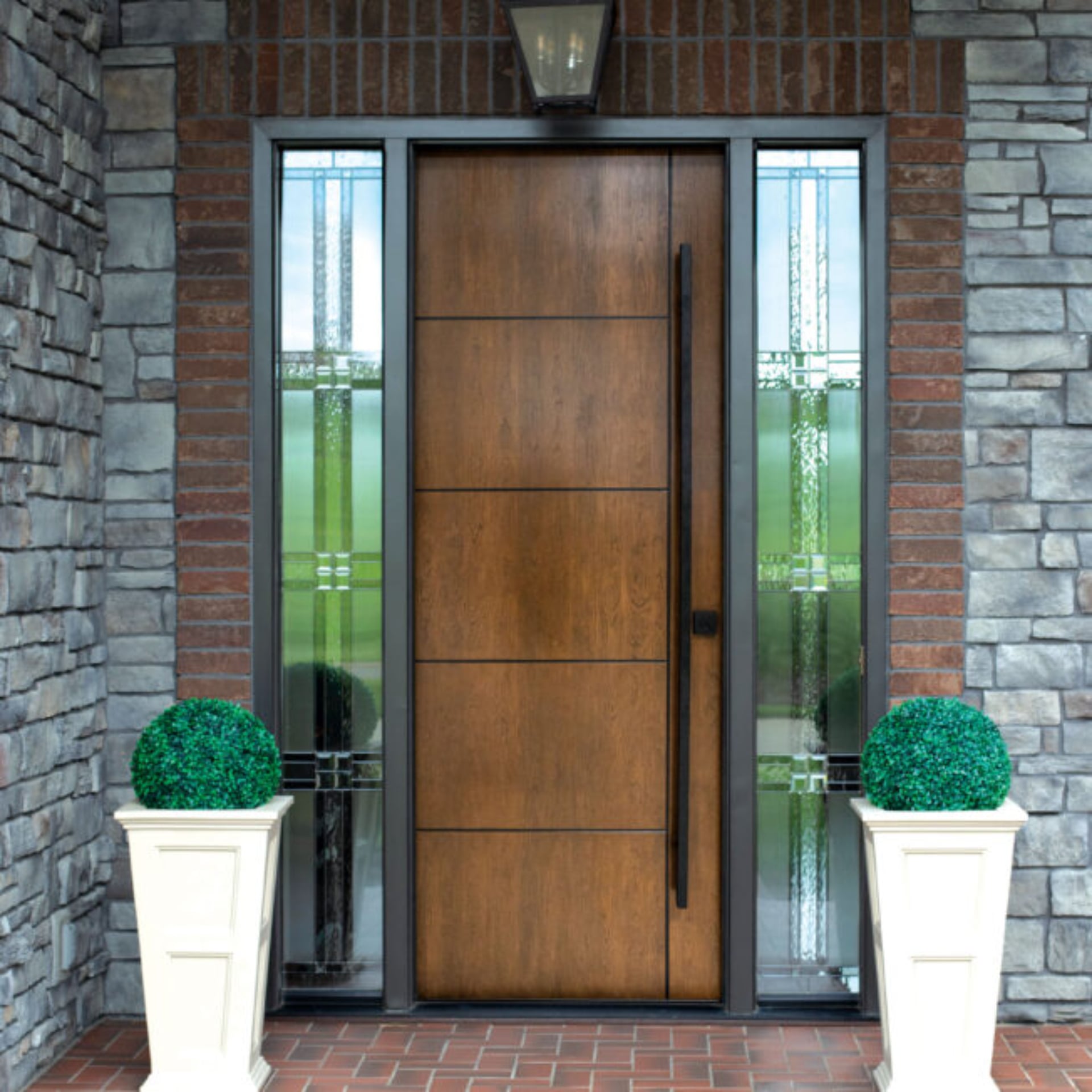
This bark-colored slab in a natural stain features five evenly spaced horizontal inscribed grooves running the full width of the door, with a floor-length square pull bar in matte black as the sole hardware. Two full-height sidelites flank the door with decorative textured glass framed in matching black, which diffuses the view while adding visual interest.
This door suits homes with brick, stone, or mixed-material exteriors, where the natural tone connects to the existing palette without replicating it. Homeowners looking to modernize a traditional exterior will find this configuration bridges both directions without committing fully to either.
8. Fir-Grain Door With Divided Glass
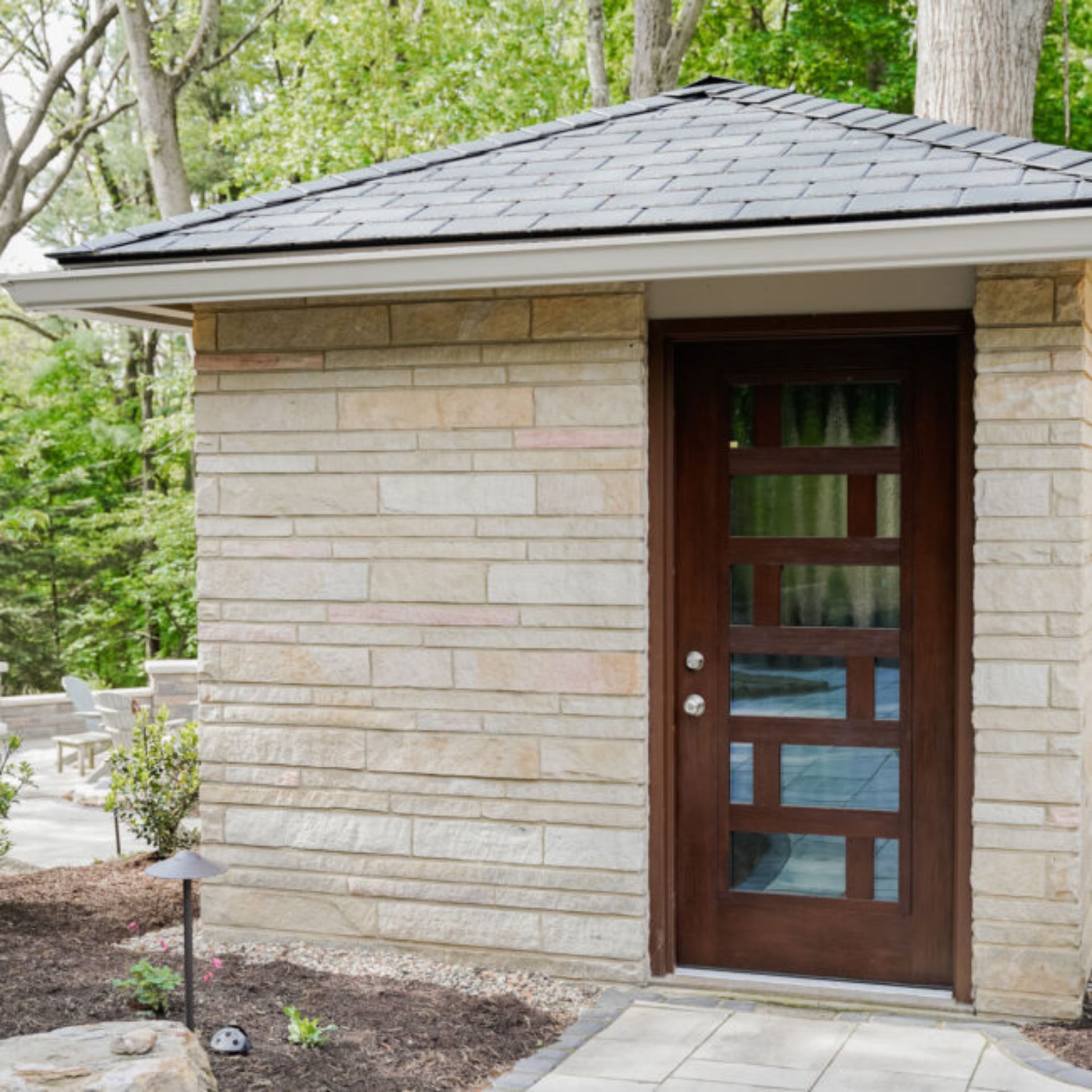
This door is framed in dark fir-grain wood with thick horizontal and vertical dividers that break the glass into a repeating grid of rectangular panes running the full height of the slab. The dividers are substantial enough to give the door visual weight and structure despite the large amount of glass. Brushed nickel hardware provides the only contrast against the dark finish.
This door suits stone or brick homes where a warm, dark finish ties into the existing exterior palette. The grid pattern is a practical choice for homeowners who want maximum light at the entry while the wood dividers maintain the look of a solid, structured door.
9. French Doors With Waterfall Privacy Glass
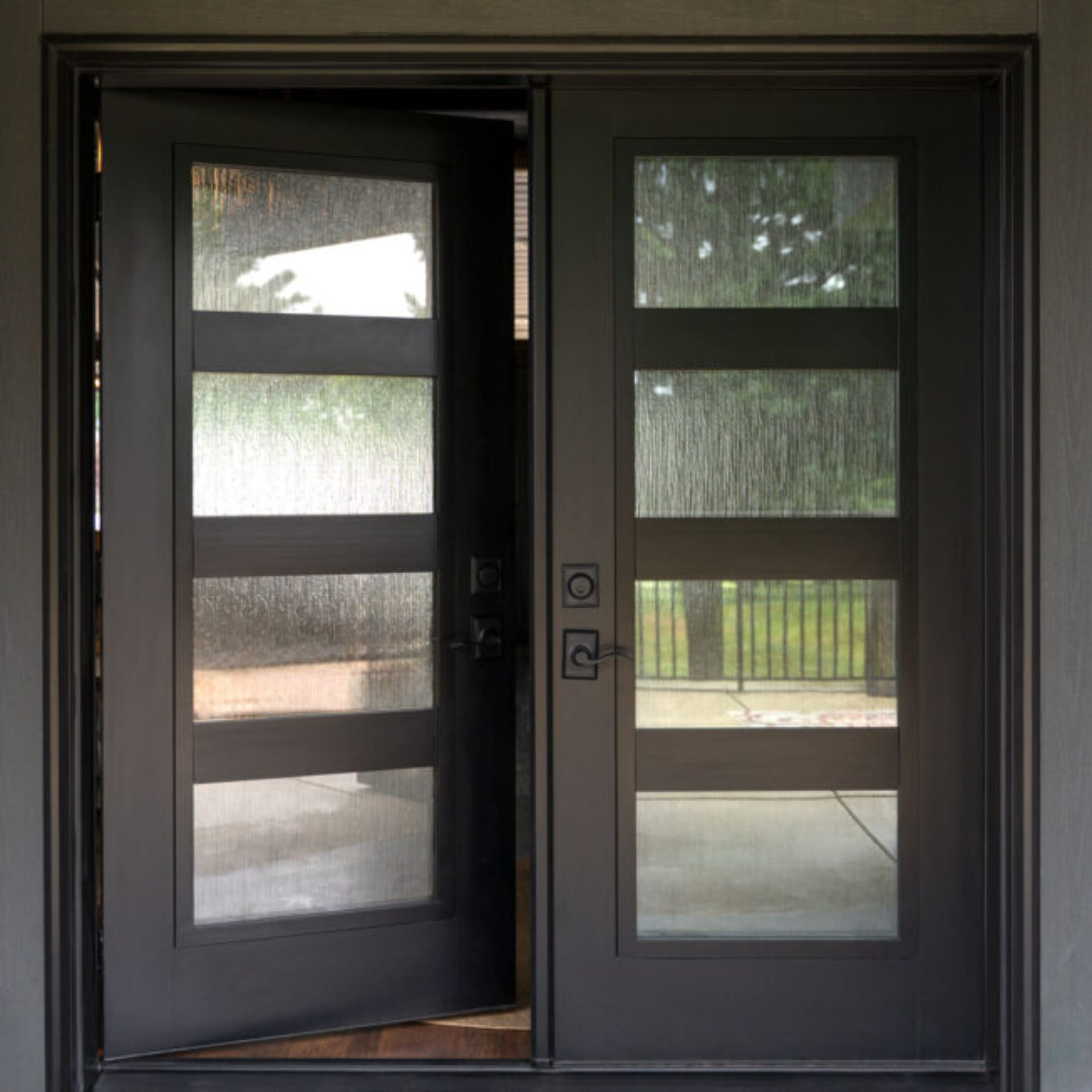
This French door configuration splits the entry across two equal slabs. Each door has four large horizontal glass panes separated by thick flat stiles. The glass has a waterfall texture that distorts the view while still transmitting light, giving the entry openness without exposing the interior. The hardware is a minimal flush-mount lever on each door, keeping the profile flat against the dark finish.
French double doors suit wider entryways where a single slab would look undersized relative to the opening. The waterfall glass makes this configuration a practical option for homes where the entry faces a street or is visible from a neighbor’s property.
10. White Oak Door With Vertical Inscribed Grooves
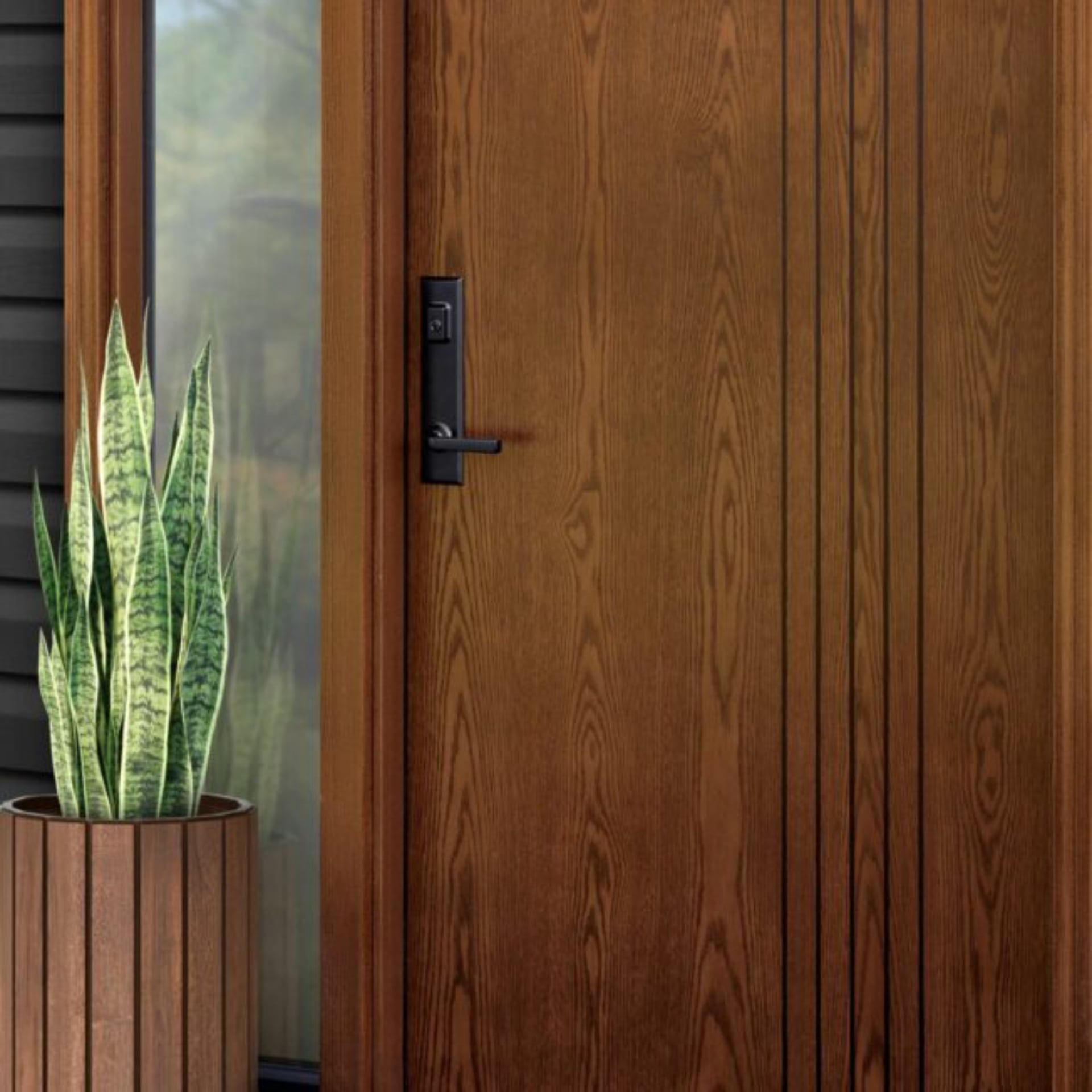
This white oak slab features prominent natural grain running the full height of the door, with thin vertical inscribed grooves spaced evenly across the surface that follow and reinforce the direction of the grain. The result is a door where the wood itself is the focal point, with matte black hardware as the only contrast. A narrow sidelite to the left completes the entry without drawing attention away from the slab.
This door suits homes with dark or natural wood exteriors, where the warm oak tone extends the material palette of the facade to the entry. Homeowners who want a door that leads with natural material character rather than color or glass will find that this finish and groove pattern delivers that without needing additional detail.
11. Sturdy Bronze-Colored Door With Framed Geometric Lites
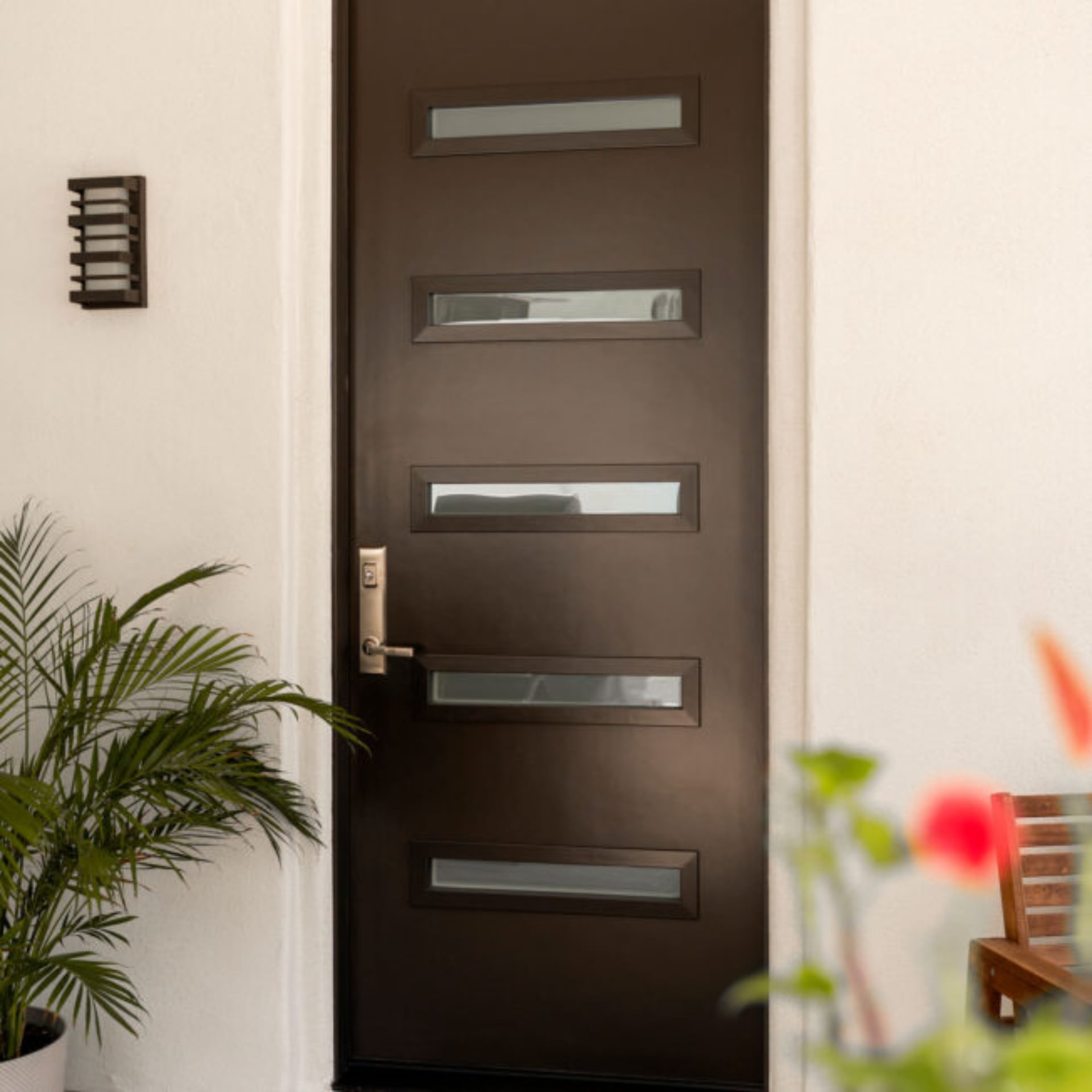
This deep rustic bronze-colored slab carries five narrow horizontal frosted glass lites spaced evenly down the center of the door, each framed by diagonal wood seams that form a geometric border around the glass. The angled framing gives each lite its own defined shape rather than a simple rectangular cutout, adding detail to the slab without introducing ornate molding. The frosted glass blocks any clear view through while still pulling daylight into the entry.
This door works well on white or light stucco exteriors, where the dark bronze creates a strong contrast against a clean background. The geometric lite framing is a subtle detail that rewards close inspection, making it a good choice for homeowners who want a door with more character than a plain flat slab.

Schedule a Free Consultation
Get a free home window inspection, talk with one of our design consultants to get product recommendations, and learn about special offers and financing.
Is Mid-Century Modern the Right Style for Your Home?
Mid-century modern doors are compatible with a wide range of home styles, but they work best when the surrounding architecture shares at least some of the same visual sensibility. The following are good indicators that the style is a natural fit.
- Low-pitch or flat roofline. The horizontal emphasis of a mid-century modern door aligns naturally with a roofline that runs parallel to the ground rather than rising to a steep peak.
- Horizontal siding, cedar lap, board-and-batten, or smooth stucco. These cladding materials share the same flat, unornamented character as the doors themselves, making the transition from wall to entry feel intentional.
- Dark or consistently finished window frames. When the windows already carry a strong finish color, a mid-century modern door in a coordinating tone ties the facade together rather than standing apart from it.
- Minimal, flat exterior trim. Homes without decorative molding or carved detail give a clean-lined door room to be the focal point of the entry.
- Clean sight lines at the entry. Without columns, arches, or heavy traditional framing competing for attention, the door itself does the work.
- Preference for natural wood tones, bold accent colors, or graphic black-and-white contrast. These are the finishes mid-century modern doors are designed around, and they reward homeowners who are willing to commit to a deliberate color choice.
- An entry that faces a garden, courtyard, or outdoor space. Glass-forward door configurations in this style are well-suited to entries where bringing the outside in is part of the intent.
Replace Your Front Door with Confidence
Choosing the right mid-century modern entry door involves style, material, glass, hardware, and installation quality working together. At Lake Washington Windows and Doors, we install complete. ProVia entry door systems with hardware selected and fitted as part of the full installation.
If you are a Seattle-area homeowner, request a complimentary in-home consultation with Lake Washington Windows and Doors. Our team will walk you through door and hardware options, help you match the right style to your home, and handle the installation from start to finish.