


Our 2025 Guide to Energy Efficient Windows
As our society becomes more environmentally conscious, more homeowners install energy-efficient windows. Using various energy-saving technologies, energy-efficient windows minimize heat gain and loss to regulate a home’s energy efficiency and internal temperature. As a result, homeowners enjoy a more comfortable living space while recouping as much as 30% of their monthly energy costs and increasing their home value.
At Lake Washington Windows and Doors, we only install the best energy-efficient replacement windows on the market. This article will cover energy-efficient windows from top to bottom so you can make the best choice when purchasing your next replacement windows.
What Are Energy-Efficient Windows?
The primary issue with old, inefficient windows is that they allow a significant amount of heat transfer through a process known as window convection. Without going into a detailed science lesson, window convection cools your home’s heated air during the winter and heats your home’s cooled air during summer. This hidden cost leads to a massive waste of energy as your home’s HVAC system has to fight against heat transfer by working harder to keep your home at a comfortable temperature.
ENERGY STAR® energy-efficient windows are designed to reduce heat transfer significantly using energy-saving technologies. They address the effects of air leakage, convection currents, and solar radiation by utilizing sealed multi-pane glass filled with argon or krypton gas, low convection frame material, and Low-E glass coating to keep your home at a comfortable temperature while reducing the strain on your home’s HVAC system.

The Top 3 Benefits of Energy-Efficient Windows
Choosing energy-efficient windows can provide homeowners various benefits, including savings and increased home value. The top benefits of energy-saving windows include:
1. Energy Savings = Financial Savings
Homeowners who replace single-pane windows with ENERGY STAR® windows can expect to save between $125 and $340 per year in energy costs. On average, homeowners save approximately 12% annually, or $200-$600,using energy-efficient windows.
Additionally, Seattle homeowners can claim rebates of $100-$200 per window, up to $750, through Puget Sound Energy, as well as a 10% federal tax credit when they replace their old windows with energy-efficient windows. Make sure you’re also investing in proper window installation; top-shelf windows with bottom-shelf installation will hurt your ROI long-term.


2. Increased Home Value
Energy-efficient windows will also increase your home’s overall property value and curb appeal as homebuyers are often willing to pay a better price for aesthetically pleasing homes with higher levels of energy efficiency.
Zillow reports that new vinyl windows have an average national cost of $16,802 and a resale value of $12,332, yielding a return on investment (ROI) of 73.4%. Similarly, new wood windows cost about $20,526 with a resale value of $14,530, resulting in a 70.8% ROI.
3. Improved Home Comfort
Finally, energy-efficient window frames offer an excellent combination of benefits, perfect for homeowners who desire a beautiful aesthetic while benefiting from these windows’ superior energy efficiency.
Technologies Used in Energy-Efficient Windows
Each component of an energy-efficient window utilizes various energy-saving technologies to reduce the effects of air leakage, convection currents, and solar radiation.
Multi-Layer Glass Panes
Some time ago, manufacturers discovered that window insulation could be significantly improved by sandwiching multiple layers of glass together rather than using a single pane. These multi-layer window designs create air pockets between each pane. Those pockets are then sealed to prevent air from entering or exiting the space.
Double-pane windows utilize two panes of glass with a sealed compartment between them. The additional pane significantly reduces the UV rays that can pass through the window, which keeps your home cooler in the summer. Double-pane windows also prevent the warm air in your home from dissipating, which conserves energy during cooler months.
Triple-pane windows utilize a third layer of glass to create two separate sealed compartments. This additional layer of glass can stop up to 95 percent of all unwanted UV rays. Generally, homeowners choose triple-pane windows when enhanced energy performance is their primary objective, as they cost nearly twice as much as double-pane windows.
Gas-Filled Panes
Manufacturers then discovered that inert gases like krypton and argon were much better insulators than air due to their ability to slow the movement of hot and cold air significantly, stopping radiant heat from passing through the window and reducing heat transfer.
With these inert gases serving as additional insulation layers, double-pane windows can provide three layers of protection, while triple-pane windows can provide five protective layers.
Low Emissivity (Low-E) Window Coating
A window’s emissivity refers to its ability to reflect and radiate heat rather than absorb it. Low-E window coatings are microscopically thin layers of transparent metal or metallic oxide between the window panes to reflect solar energy.
Low-E coating can increase a window’s energy performance by as much as 40%. It can be applied to manipulate heat transfer depending on the surrounding climate by reflecting solar energy away from your home or keeping it from leaving once it has passed through your windows.
Window Spacers
Finally, non-metal and metal hybrid window spacers installed between window panes insulate the pane edges to improve insulation, prevent condensation, and further reduce heat transfer.
Energy-Efficient Window Styles and Frames
At Lake Washington Windows and Doors, we provide energy-efficient options for every window style in our inventory. Some window styles are inherently more efficient than others based on their construction and functionality. Fixed picture windows are intrinsically more efficient than operable ones, while gasketed casement windows are more efficient than single or double-hung ones. The following is a list of all our window styles in order of energy efficiency and frame materials.
Frames For Energy-Efficient Windows
While glass makes up roughly 80% of any window unit, installing gas-filled multi-pane glass won’t do much good without an equally efficient window frame. High-quality frame materials like fiberglass and vinyl are far more stable than older frame materials like wood, which expands and contracts, allowing air leakage, or aluminum, which results in rapid heat conduction.
Fiberglass window frames are by far the most energy-efficient and costly. Insulated vinyl frames provide significant energy efficiency with minor expansion and contraction.
Milgard C700 Series Fiberglass Window Frames
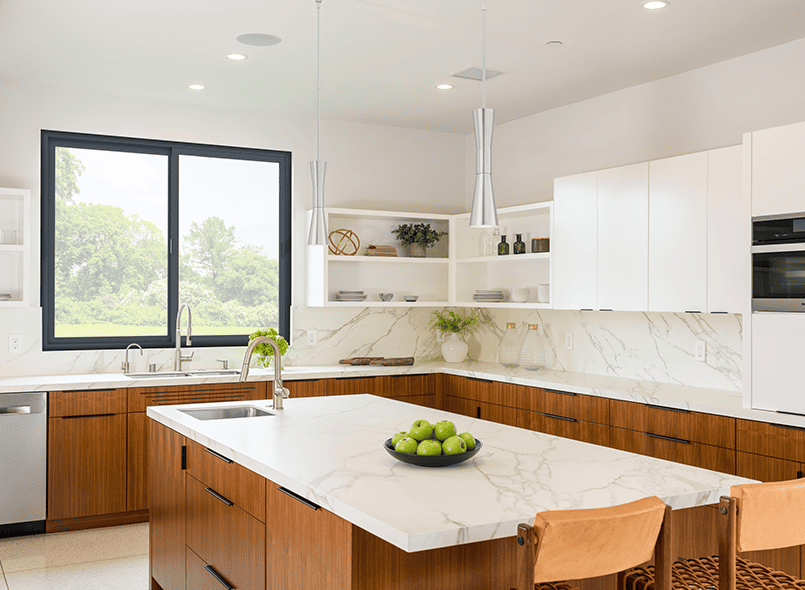
Milgard’s C700 Series fiberglass frames are designed for homeowners who want strong, stable, and energy-efficient windows that perform well in Pacific Northwest conditions. Fiberglass is one of the most durable frame materials available, and because it expands and contracts at nearly the same rate as the glass it holds, it helps maintain tighter seals, reduce air leakage, and support long-term performance.
C700 windows are built with modern energy efficiency in mind. Standard SunCoat® Low-E2 glass helps reflect heat while still allowing natural light into your home. Combined with insulating glass units and advanced spacer systems, these windows help regulate indoor temperatures, reduce energy use, and improve overall comfort throughout the year. The frame and glass system work together to resist condensation and support consistent performance over time.
Learn more about our Milgard Fiberglass Window Frames
|
Milgard C700 Series Energy Efficient Features |
|
| Designed for high energy performance | C700 windows are engineered to meet modern energy efficiency expectations, helping reduce heat transfer and improve comfort in a wide range of climates, including the Pacific Northwest. |
|
Stable fiberglass frame construction |
Fiberglass frames expand and contract at nearly the same rate as the insulated glass unit, reducing stress on seals. This helps prevent air leaks and supports consistent thermal performance over time. Fiberglass is one of the most energy-efficient window frame materials available. It expands and contracts at nearly the same rate as the insulated glass it surrounds, reducing stress on the seals to prevent air leaks and maintain energy efficiency over time. |
| Advanced Low-E glass performance |
C700 windows come standard with SunCoat® Low-E2 glass, which uses a thin, transparent coating to reflect heat back toward its source. This helps keep your home warmer during colder months and cooler during warmer periods while still allowing natural light to pass through. The coating also reduces UV exposure, helping protect interior finishes from fading over time. |
| Multiple glass configurations |
Different glass options allow homeowners to tailor performance based on their needs:
|
| Warm-edge spacer technology | Advanced spacer systems are designed to reduce heat transfer at the edges of the glass. This helps improve overall insulation, supports argon gas retention, and reduces the likelihood of condensation forming along the glass perimeter. |
Anlin Del Mar Premium Vinyl Window Frames

While vinyl expands and contracts at a higher rate than fiberglass, it’s still a highly efficient, durable, and affordable frame material, perfect for homeowners who value energy efficiency and are working on a budget:
- The Del Mar Series
- The Del Mar Extended Series
- The Coronado Series
Anlin windows combine advanced glass technology with 99% UV blockage, heat retention coatings, and argon gas insulation for superior energy performance. Their easy-clean coating and durable design ensure long-term efficiency and low maintenance, exceeding ENERGY STAR® standards by up to 25%.
Learn more about our Anlin Windows
| Anlin Energy Efficient Features | |
| ENERGY STAR®, AAMA, and NFRC Verification |
Each unit exceeds ENERGY STAR® guidelines for U-factor and solar heat gain coefficient (SHGC). Anlin windows undergo optional thermal performance and condensation resistance testing through the American Architectural Manufacturers Association (AAMA), conducted by the National Fenestration Rating Council (NFRC). This independent organization sets the national standard for energy efficiency ratings in windows and doors. |
| Engineered XTRU™ Architectural Vinyl Frames |
XTRU™ Architectural Vinyl is a premium material engineered for long-term durability and energy efficiency, incorporating titanium dioxide and other advanced stabilizers. It has been tested under accelerated weathering and heat absorption conditions to outperform conventional vinyl formulations. |
| Insulated Frame Technologies: Comfort•Core™ and Inner•Core™ |
The Anlin Coronado Vinyl windows are designed with two proprietary technologies that enhance insulation and structural performance:
|
| High-Performance Glass Packages for Every Climate |
Anlin offers multiple glass package options to suit your home’s climate and lighting needs.
|
| QuadraTherm™ Heat Retention Coating |
QuadraTherm™ multi-layer interior heat retention coating enhances thermal insulation for homes in colder climates or rooms that need extra warmth during winter. QuadraTherm™ reflects heat into your home, reducing heat loss through the glass and improving indoor comfort on cold days and nights. Combined with any of Anlin’s high-performance glass packages, it creates a powerful dual-defense system — blocking unwanted heat in summer while retaining warmth in winter. |
| Spacer & Seal System |
Anlin windows feature a best-in-class spacer and seal system:
|
| Weather-Tight Construction |
Every Anlin window has features that enhance energy performance by reducing air infiltration and ensuring a secure, consistent seal.
|
Start Saving with Energy-Efficient Windows Today
Upgrading to energy-efficient windows is one of the smartest investments you can make for your home. With better comfort, lower utility bills, and added property value, the benefits speak for themselves.
Contact us today to schedule a free in-home consultation. Whether you’re replacing old single-pane windows or building a more efficient home from the ground up, Lake Washington Windows and Doors is here to help you get it done right — with top-rated products and expert installation that meets the highest industry standards.
FAQs – Energy Efficient Windows
Do energy-efficient windows really make a difference?
Yes. According to the U.S. Department of Energy, heat gain and loss through windows are responsible for 25% to 30% of residential heating and cooling energy use. ENERGY STAR® certified windows can reduce energy bills by an average of 13% nationwide.
What is R-Value, U-Factor, SHGC, AL, VT, and CR?
Terms such as R-value and U-factor describe a window’s energy efficiency performance:
R-value measures thermal resistance or the ability to resist the flow of heat. The higher the R-value, the more efficient the window is.
U-factor measures the thermal transmittance or the heat lost through the material. The lower the U-factor, the better it insulates.
Solar heat gain coefficient (SHGC) represents the amount of solar heat that passes through the glass.
Visible transmittance (VT) represents the amount of daylight (or visible light) that passes through the glass. A high number allows more light to pass through the glass than a low number.
Air leakage (AL) measures airflow via the window joints. A lower AL means less air leakage.
Condensation resistance (CR) measures a window’s resistance to condensation. The higher the CR, the more resistant.
How do I tell if it’s time to upgrade to energy-efficient windows?
You’ll know it’s time to upgrade if your heating and cooling costs are increasing, you can feel a draft throughout your house, your windows are hot or cold to the touch, or they are showing visible signs of aging.
What qualifies a window as ENERGY STAR® certified?
To earn the ENERGY STAR® label, a window must meet performance standards set by the U.S. Environmental Protection Agency. These include maximum U-factor and t SHGC ratings based on your climate zone. All windows we install exceed ENERGY STAR® requirements for the Pacific Northwest.
How long do energy-efficient windows last?
High-quality, energy-efficient windows can last 30 to 50 years with proper installation and maintenance. Our fiberglass and vinyl windows are built for long-term performance and backed by strong manufacturer warranties.
What is the most energy-efficient window type?
Fixed-pane windows, such as picture windows, are generally the most energy-efficient because they don’t open, eliminating air leakage. Among operable styles, casement windows are considered the most efficient. They use a compression seal (similar to a door) that creates a tighter seal than the sliding mechanisms found in single- or double-hung windows.
Which window frame is most energy-efficient?
Fiberglass window frames are considered the most energy-efficient due to their low thermal conductivity, structural stability, and ability to expand and contract at nearly the same rate as glass. This minimizes air leakage and maintains long-term seal integrity.

Schedule A Free Consultation