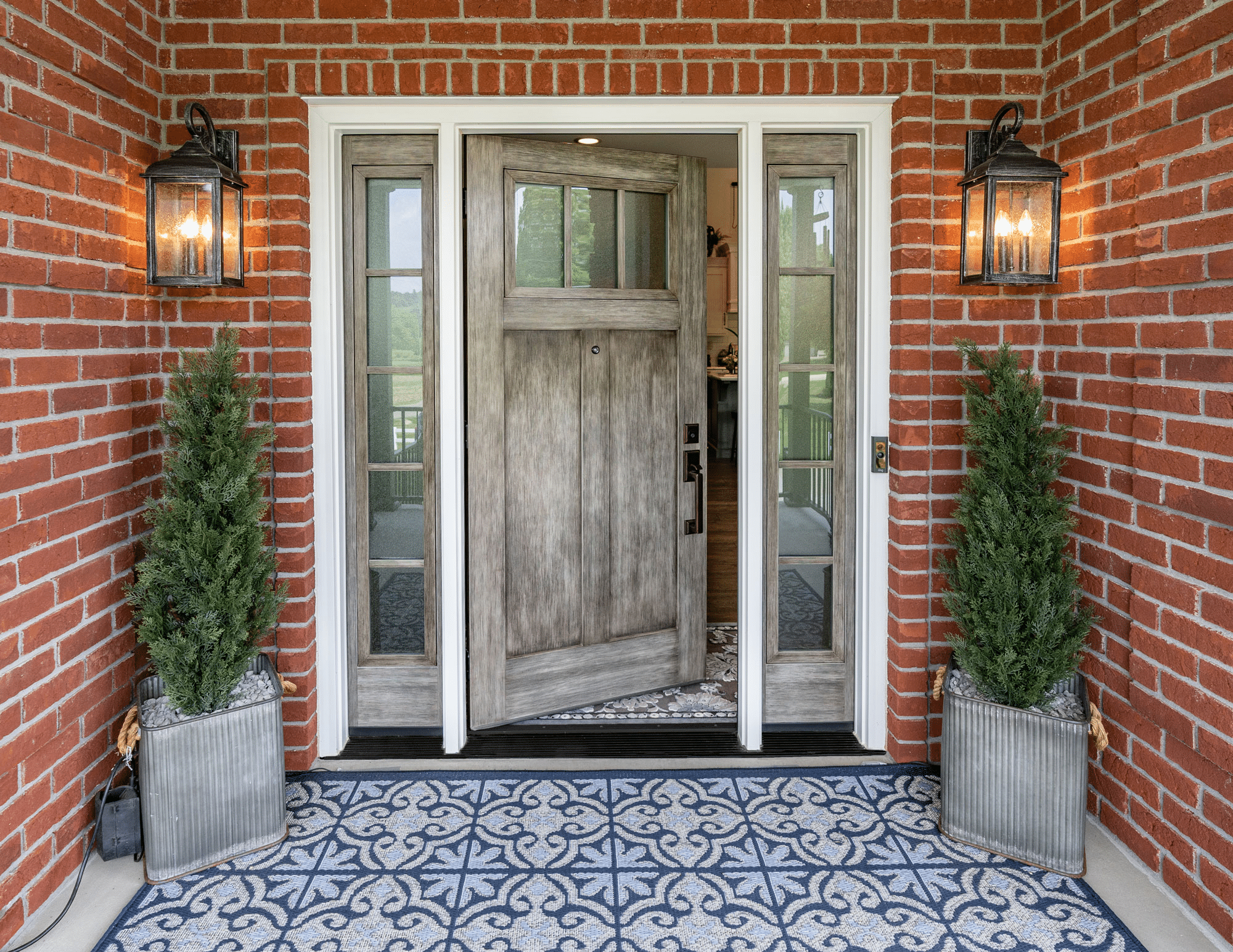
When you replace an entry door, you need to specify more than size and style. You also need to tell the manufacturer which way the door opens, known as the handing. The terminology isn’t intuitive, the rules change depending on the direction the door swings, and retailers use slightly different conventions. Order the wrong handing, and you’re looking at delays, return costs, or a door that won’t work in your opening. This guide explains what door handing means, how to determine yours, and how to make sure the door you order is the door that shows up.
What “Door Handing” Actually Means
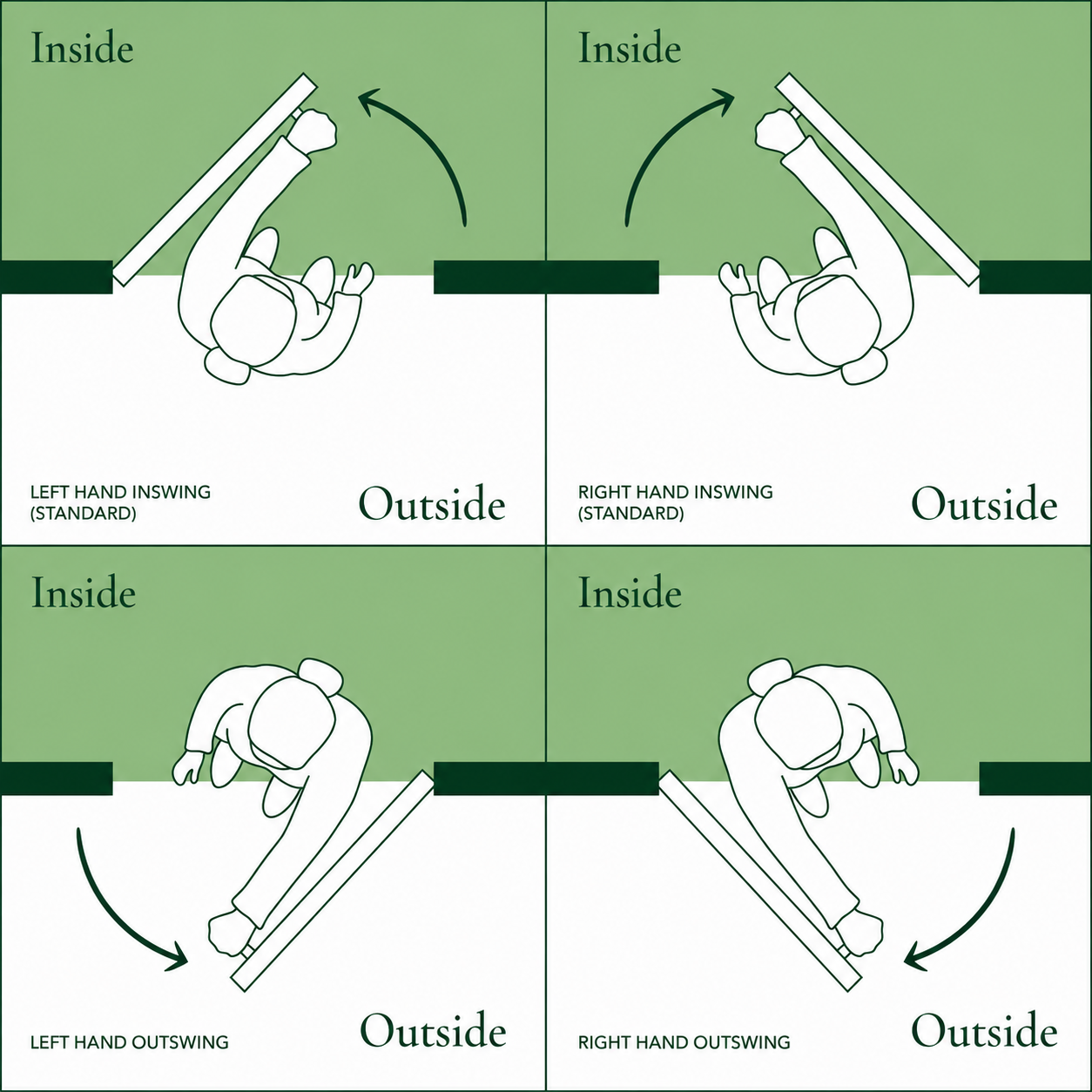
Door handing is a specification that describes two things at once: which side of the door the hinges are on, and which direction the door swings when it opens. Together, those two pieces of information determine the “hand” of the door.
Manufacturers need this information before they build a prehung door unit because the hinge cutouts, latch bore, and lockset hardware are all set at the factory. Unlike a slab door, where you can mount the hinges yourself, a prehung door arrives ready to install in a specific configuration.
If the handing is wrong, the hardware will be on the wrong side, or the door will swing the wrong direction. Neither is a quick fix once the unit is on your doorstep.
How to Determine If Your Door Is Right-Hand or Left-Hand
Most exterior entry doors are inswing, meaning the door opens toward the interior of the home. Outswing doors open toward the outside and are less common as an exterior door, though you’ll find them in certain climates and architectural styles. The method for identifying your handing works the same either way.
- Open your entry door.
- Turn facing away from the door, so your back is against the hinge side of the frame.
- If the door handle is now on your right, you have a right-hand door.
- If the door handle is now on your left, you have a left-hand door.

Schedule a Free Consultation
Get a free home window inspection, talk with one of our design consultants to get product recommendations, and learn about special offers and financing.
How to Communicate Your Door Handing When You Order
Replacement doors are ordered through dealers, not directly from manufacturers. When you contact a dealer, they’ll use standard industry terminology to specify your door. The terms map to the physical characteristics of your opening like this:
| Hinge Side (Viewed from Outside) | Swing Direction | Dealer Term |
| Right | Inswing | Right-hand |
| Right | Outswing | Right-hand reverse |
| Left | Inswing | Left-hand |
| Left | Outswing | Left-hand reverse |
The safest way to make sure the right door gets ordered is to have a dealer send someone out to look at the opening in person. An installer who can stand in front of your door will confirm the hand, the swing direction, the hardware prep, and the frame dimensions on the spot, and the order goes in with verified specs rather than a description you gave over the phone. That’s where transpositions and miscommunications get caught before they become problems.
If you’re preparing ahead of a call or showroom visit, a photo of your door from the outside with the hinge side clearly visible is worth more than any verbal description. If you do describe it verbally, lead with the physical details: which side the hinges are on, and which direction the door swings. That’s unambiguous regardless of which conventions the dealer uses internally.
When It’s Worth Considering a Handing Change
For a straightforward replacement, matching your existing handing is almost always the right call because the framing and rough opening are already built around your current configuration. Changing the swing direction can mean modifications to the frame, weatherstripping placement, and threshold. That said, a door replacement is also a natural moment to ask whether your current setup is actually working for you. If any of the following apply, it’s worth discussing a handing change with your installer before the order goes in.
- The door can’t swing fully open. If your current door hits a wall, staircase, or piece of furniture before it’s fully open, a different hand could give you a more functional entry without any structural changes to the opening itself.
- The swing direction works against your entryway traffic. A door that opens into the path you naturally take when entering or carrying groceries is a daily inconvenience that a handing change can solve permanently.
- You’re renovating the entry area at the same time. If the surrounding space is already being reconfigured, that’s the best moment to change the swing direction, before the new layout is locked in around the existing door position.
- The handle side puts the hardware in an awkward location. If your current configuration places the lockset against a wall or tight corner, making the door difficult to operate, switching hands can make the entry more comfortable to use every day.
- Someone in the household has mobility limitations. If a household member uses a walker, a cane, or a wheelchair, the direction the door swings can make a meaningful difference in how easy the entry is to navigate. A change that puts the handle on the more accessible side, or that swings the door out of the path of approach, can improve daily usability significantly.
- You’re adding or replacing a storm door at the same time. Storm doors need to be ordered with compatible handing, and if your current entry door configuration creates a conflict with how a storm door can be mounted and opened, that’s worth resolving at the same time, rather than after both are installed.
- The current swing direction exposes your entryway to the weather. In climates with strong prevailing winds or heavy rain, a door that swings open into the weather rather than away from it can make entry difficult and accelerate wear on the weatherstripping. If your entry is particularly exposed, changing from inswing to outswing or adjusting the hand can reduce that impact.
Why Professional Installation Makes a Difference
Handing is one of several specifications that need to be right before a door order goes in. Size, swing direction, hardware prep, glass configuration, and frame material all have to be confirmed against your existing opening and your home’s conditions. A mistake on any one of them produces an unusable door that has to be reordered.
When you work with an experienced installer, the in-home consultation is where all of this gets resolved before anything goes on order. A trained installer will typically:
- Measure your opening on-site rather than relying on your estimates, confirming the exact dimensions the door unit needs to be built to.
- Verify your handing in person and evaluate whether your current swing direction is actually working for your space before locking in the order.
- Identify whether the rough opening needs modification before installation. If the existing frame is out of square, damaged, or not built to the dimensions the new door unit requires, a professional will catch that before the order goes in, rather than on installation day when the door is already on site.
- Confirm hardware prep and glass configuration based on your specific door and frame conditions, not a generic spec sheet.
- Place the order directly with the manufacturer using verified measurements, removing the chain of communication where handing errors most commonly happen.
The in-home visit is also the right moment to catch anything about your existing frame or threshold that could affect installation, things that aren’t visible from a product page or a phone call. Getting a professional set of eyes on the opening before the order goes in is the simplest way to make sure the door that arrives is the one that gets installed correctly.
Ready to Replace Your Entry Door?
Ordering the right door starts with having the right information, and getting that information right is harder than it looks when you’re doing it on your own. Handing, swing direction, sizing, hardware prep, and frame compatibility all need to be confirmed before anything goes on order. Working with an experienced local dealer means those details get handled during the consultation, not discovered after the door arrives.
If you’re a Seattle-area homeowner ready to replace your entry door, request a complimentary in-home consultation with Lake Washington Windows and Doors today.